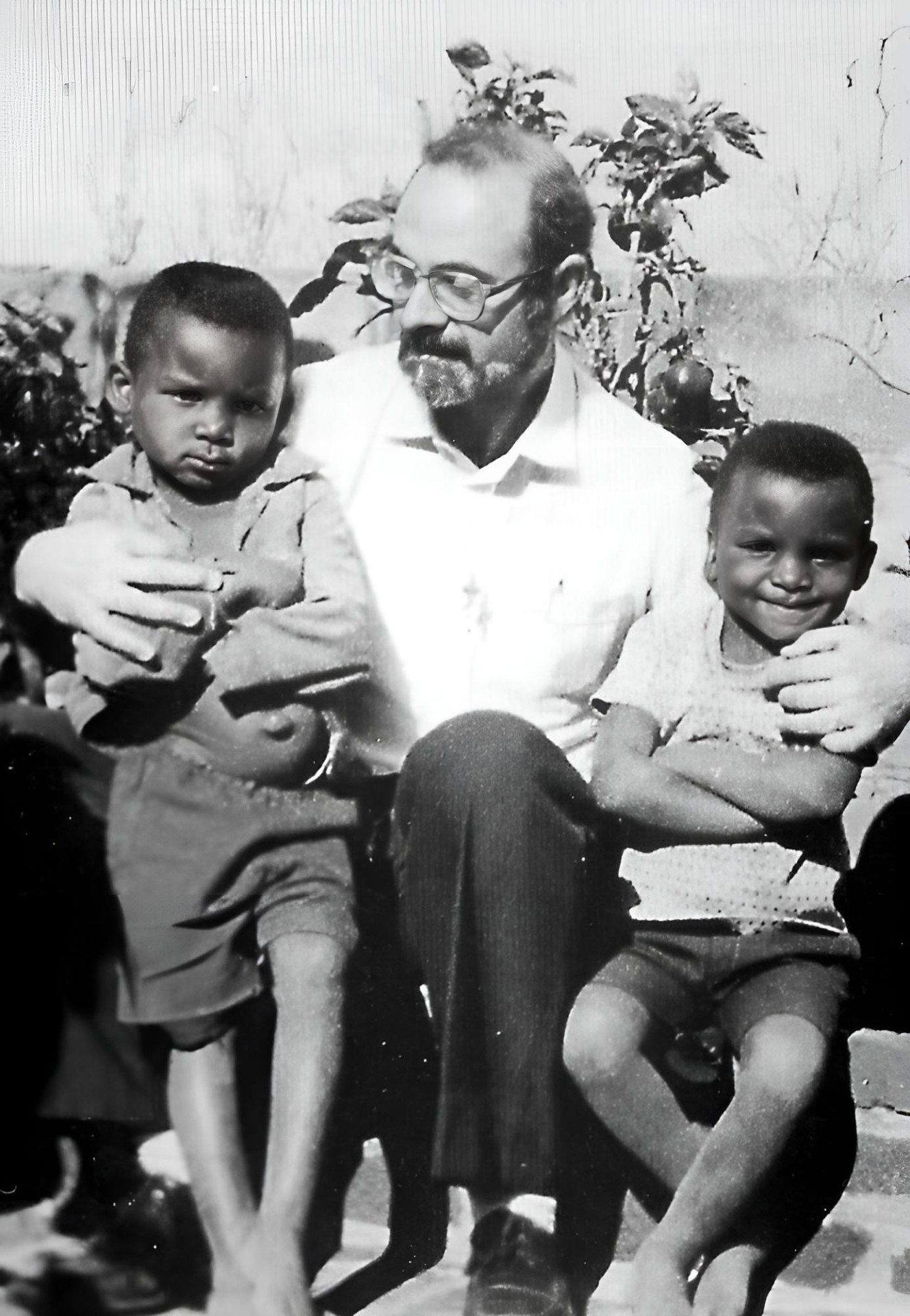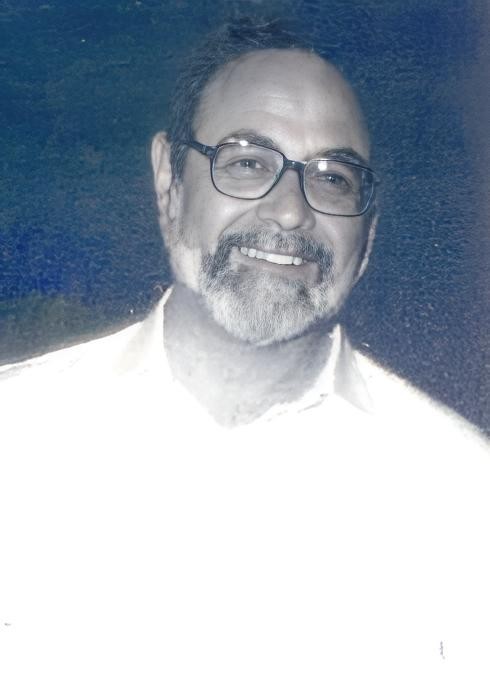


P. Giovanni Tumino
Ragusa, 14 agosto 1945
Kalete (RDCongo ) 9 ottobre 1996
Oggi 9 ottobre 1996, è stato comunicato da Kamituga il ritrovamento dell’aereo nel quale viaggiava P. Tumino. Lo ha ritrovato, già lunedi scorso, il capo cristianità di una comunità della parrocchia di Kigulube. Egli era partito subito per andare ad avvisare ma ha impiegato 2 giorni per arrivare a Kamituga da dove poi la notizia è stata subito trasmessa ai nostri Bukavu, questo pomeriggio.
Il capo comunità ha trovato l’aereo sfracellatosi contro la montagna, a Kalete, con i corpi dei 4 viaggiatori fracassati. Si tratta di P. Giovanni Tumino, dell’Abbé Cimanuka, di un commerciante e del pilota, un greco. Il luogo dell’incidente è un poco fuori dalla rotta abituale per questo viaggio: probabilmente la tempesta li ha dirottati.
I corpi sono stati già seppelliti in zona.
P. Giovanni aveva da poco compiuto cinquantun anni, essendo nato a Ragusa il 14.8.1945. Allievo del Seminario diocesano fino alla seconda liceo, entrò nel Noviziato Saveriano di S. Pietro in Vincoli il 24 settembre 1963 e il 3 ottobre dell’anno successivo emise la Prima Professione. Compì il corso liceale nella casa di Tavernerio e quello teologico a Parma, dove fu ordinato sacerdote il 27 settembre 1970.
Terminati gli studi teologici fu, per un anno, a Parigi per lo studio del francese e nel 1972 raggiunse lo Zaire, la missione che aveva tanto desiderato. Ma l’anno successivo, nella sofferta ricerca di una sua identità, chiese insistentemente ed ottenne dai Superiori di tornare a Parigi (1974): vi rimase fino al 1981 vivendo una sua particolare esperienza tra i “preti operai”, a contatto con alcuni gruppi giovanili molto impegnati e frequentando un corso per infermieri professionali, conseguendo anche, ad Anversa, una specializzazione in malattie tropicali.
Nel 1981 ritornò in Zaire e lavorò a Cimpunda come vicario cooperatore e impegnato nel campo sanitario. Nel 1991 passò a Kampene (Diocesi di Kasongo) sempre come vicario cooperatore e come responsabile del Bureau des Oeuvres medicals. E da Kampene, il 5 ottobre u.s., partì per il viaggio che lo ha condotto nella casa del Padre.
P. Giovanni amava il ciglio della strada più che la linea bianca, ma da qualche tempo cercava “l’armonia”. Lo ha scritto nella lettera inviata al P. Generale per ringraziarlo degli auguri del 25° di ordinazione presbiterale (28.9.95), : “Ho ringraziato per i due regali che il Signore mi ha fatto in questi 25 anni. Il primo: non mi ha fatto mancare ‘il sacramento della sua mano’ quando mi sono messo a camminare sul ciglio della strada. Il secondo: quando sono rientrato in carreggiata, il Signore ha mantenuto in me una certa allergia alla striscia bianca in mezzo alla strada e una certa nostalgia del ciglio. Questo giorno mi ha permesso di chiederGli adesso il terzo regalo: l’Armonia. Mi basterebbe per tutta la vita”.
Fr. Giovanni Tumino
Ragusa, 14 agosto 1945
Kalete (RDCongo ) 9 ottobre 1996
On Oct. 9 1996, the body of our confrere Fr. Giovanni Tumino was found by the leader of the Christian community of Kigulube, together with the other 3 passengers who were flying a private plane. On Oct. 5 1996, when they left Kampene, there was a bad storm approaching, and that probably caused their sudden death by crashing the plane on a mountain. Fr. Tumino was 51 years old, born at Ragusa on Aug. 14 1945.
Student at the diocesan seminary of Ragusa, Fr. Giovanni entered the Xaverians at S. Pietro in Vincoli for Novitiate on Sept. 24 1963, and professed Religious Vows a year later on Oct. 3 1964. After studies in Tavernerio, he did his theology courses in Parma, where he was ordained priest on Sept. 27 1970.
He was soon assigned to Zaire, and after a year of language studies in Paris, he arrived in Zaire in 1972. “Kadutu was an old style parish which responded more to the divine rules than to human needs. There was a mass of people who attended this church, providing sacramental needs over the desperate needs of the poor of the parish.” (Fr. Tomasi) Fr. Tumino was lost in this context, for he had dreamed of a different model of doing mission. “He had come to the mission so that he could meet the people in their living environment, serving them by walking with them, guided by new and real theologies, enlightened by the Gospel and the Word of God.” (Fr. G. Montesi)
After two years, he asked the superiors to return to Paris where he served as a “factory priest”, following youth groups, and specializing in nursing, with particular attention to tropical diseases. He received a specialization in this field at Anversa.
He wrote: “I wish that my priesthood follows the model of Christ, the ‘lay man’ who spent 30 years of his ‘priestly’ life to be a person, and nothing else, like everyone else, in the midst of human beings, with them, before he became for them. That ‘lay man’ who earned his bread by working for 30 years, and then communicated his Gospel starting from real daily life, and who finally celebrates his ‘Eucharist’ on the wood of the cross.
I wish that my priesthood is modeled upon the story of Jesus who, on the road of Emmaus, even before he explains the Scriptures, walks with the disciples and becomes aware of their sadness. There is no Eucharist without communion of faith. There is no communion of faith without communion of life. Otherwise, everything becomes a job.
I wish that my priesthood be like that of St. Paul who boasted about earning his daily bread so as not to depend on others, and in order to give freely what he had received freely.
I wish that my priesthood become the result of work, communion of life and faith, be the fruit of a community… Jesus Christ was of the race of David, and I myself would like to be of the human race before being called of the priestly race.” (Nov. 22 1973)
With the passing of the years in Paris and the help of two good worker-priests, he was able to come to a solution to his personal crisis and ideals: to imitate Christ as priest, worker, and good Samaritan. That was the harmony he was looking for. He left his work in 1978 and began his studies in professional nursing. He was preparing himself to be “the Good Samaritan.” In 1981 he returned to Zaire and worked in Cimpunda (1981-91) and in Kampene (1991-96) as assistant parish priest and nurse aid, until the fatal flight of Oct. 5 1996.
He wrote to the Superior General on the occasion of his 25th of ordination, a time he was seeking personal harmony: “I thanked the Lord for two gifts that God gave me in these 25 years. First, I’ve never lacked 'his sacramental hand' when I journeyed on the side of the road. Second, when I regained my direction, the Lord instilled in me a joy for the white line in the middle of the road, and a nostalgia for the side. This day, I ask the Lord for the third gift: harmony. It would be sufficient for the rest of my life.” May the Lord grant him eternal rest.
Père Giovanni Tumino
Né à Ragusa (Italie) le 14.08.1945
Décédé à Kalete (Congo) le 05.10.1996
51 ans. Missionnaire en RDC à Cimpunda et à Kampene
Le 9 octobre 1996 les abbés de Kamituga (Uvira) ont rendu officielle la nouvelle de l’accident d’avion dans lequel voyageait le père Tumino. Un responsable de communauté de la paroisse de Kigulube, ayant découvert l’endroit de l’accident, avait marché pendant deux jours dans la forêt pour se rendre à la paroisse la plus proche, Kamituga, et transmettre la nouvelle du triste événement. Ce responsable de communauté avait découvert l’avion écrasé contre la montagne de Kalete, avec les corps des ses quatre occupants, tous morts. Il s’agissait du père Tumino, de l’abbé Cimanuka, d’un commerçant et du pilote, de nationalité grecque.
Le lieu de l’accident étant hors de la trajectoire habituelle de l’avion, on suppose que le mauvais temps les a fatalement déviés. Les corps ont d’abord été ensevelis sur place. Depuis l’année 2000, la dépouille mortelle du père Giovanni repose dans le cimetière xavérien de Panzi (Bukavu).
Le père Giovanni avait 51 ans, étant né à Ragusa le 14 août 1945. Elève du séminaire diocésain jusqu’en 1963, il entra au noviciat xavérien de San Pietro in Vincoli (Ravenne) où le 3 octobre 1964, il fit sa première profession. Il poursuivit sa formation à Tavernerio (Como) et à Parme où il fut ordonné prêtre le 27 septembre 1970.
L’année suivante il se rendit à Paris pour l’apprentissage du français et, en 1972, il arriva au Zaïre, à la mission où il avait toujours souhaité travailler. Mais, une année après, traversant une crise d’identité, il demanda à plusieurs reprises de rentrer à Paris. La permission lui fut accordée et il vécut, pendant 7 ans (1974 – 1981), l’expérience de « prêtre ouvrier ». Il était en contact avec des groupes de jeunes très engagés en Eglise et dans la société. Entre temps, il suivit des études d’infirmier suivis d’une spécialisation en maladies tropicales à Anvers (Belgique).
En 1981, il rentra au Congo et il travailla à Cimpunda (Bukavu) comme vicaire et assistant sanitaire. En 1991, il continua la même activité à Kampene (Kasongo) en assumant aussi la tâche de responsable du bureau diocésain des œuvres médicales.
C’est de Kampene, le 5 octobre 1996, qu’il partit pour le voyage qui l’a conduit à la maison du Père.
Le père Giovanni aimait le chemin de traverse plutôt que les sentiers bien tracés. Mais, vers la fin de sa vie, il visait l’harmonie entre « chemins de traverse » et « sentiers bien tracés ». A l’occasion du 25ème anniversaire de son ordination presbytérale, il écrit au supérieur général :
J’ai remercié le Seigneur pour deux cadeaux qu’il m’a offert en ces 25 ans. Le premier : Il a préservé en moi la grâce du sacrement lorsque j’ai choisi de m’éloigner du chemin tracé. Le deuxième : quand j’ai repris la route, le Seigneur a gardé vive en moi une certaine allergie pour les chemins trop bien tracés et une nostalgie pour les chemins de traverse. En ce jour de fête, il m’a permis de lui demander un troisième cadeau : l’Harmonie. Cela suffirait à toute ma vie (27.09.1995).
(cf. Commix, n. 75, p. 54-55)