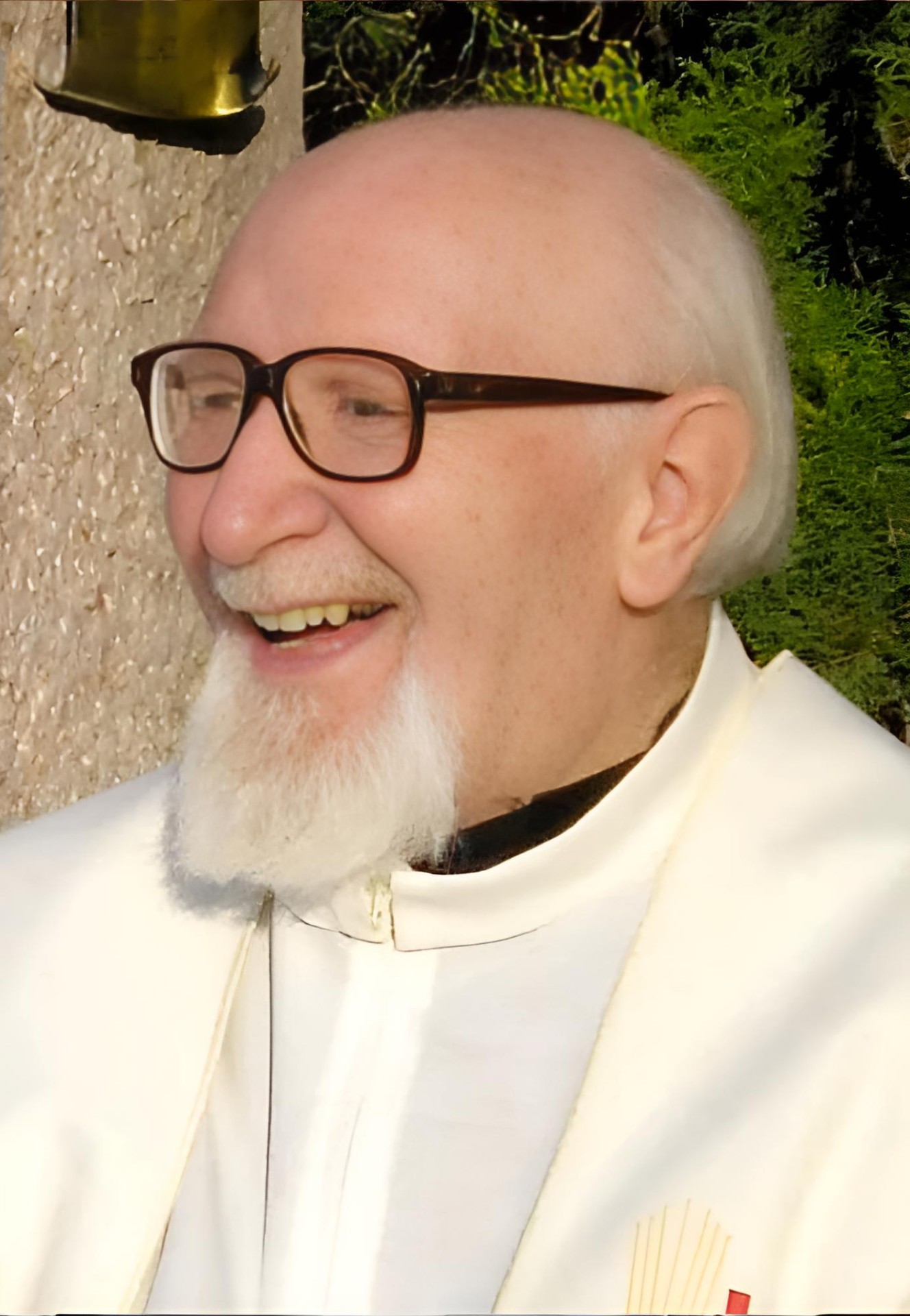


P. Battista Mondin
Monte di Malo (Vicenza) 29 luglio 1926
Parma, 29 gennaio 2015
Alle ore 22,00 del 29 gennaio 2015, a Parma in Casa Madre, per arresto cardio-respiratorio, è morto P. Battista Mondin. Aveva 88 anni compiuti, essendo nato a Monte di Malo (Vicenza – Italia)) il 29.07.1926.
Parlando della sua vocazione, P. Battista immancabilmente ricordava con grande riconoscenza i genitori «che col dono della vita mi hanno dato l'esempio di una fede profonda, di una laboriosità assidua e di una sobrietà essenziale ... i sacerdoti della mia parrocchia, ai quali devo la mia vocazione sacerdotale e missionaria ... i miei formatori nella Congregazione Saveriana … mi hanno trasmesso lo spirito del Fondatore, il beato Conforti: lo spirito di donazione totale di se stessi per la salvezza delle anime».
Entrò all'Istituto a Vicenza nel 1938; frequentò il ginnasio a Grumone (41-43); fece il noviziato a S. Pietro in Vincoli (43-44); emise la Prima Professione a Parma, raggiunta percorrendo a piedi i quasi 200 Km che separano S. Pietro in Vincoli dalla Casa Madre; (erano i tempi più duri della II guerra mondiale e i mezzi di trasporto erano bloccati). Frequentò il primo anno di Liceo trasferito, sempre per la guerra, a Castel Sidoli (Piacenza) e gli altri due a Parma. Dopo l’anno di Prefettato a Zelarino (47-48) studiò teologia a Parma (48-49) e a Piacenza (49-52) dove fu ordinato presbitero.
Dopo l'ordinazione fu inviato negli Stati Uniti dove conseguì al Boston College il Master’s degree (1954) e alla Harvard University il Master’s degree (1957) e il Dottorato, PH. D, in Storia e filosofia delle religioni (11.5.1959). Negli stessi anni fu insegnante di latino e di Italiano nel seminario saveriano di Holliston. Nel 1959 fu richiamato in Italia. Partendo dagli Usa scriveva al Superiore Generale: «Ringrazio di cuore per avermi dato il raro privilegio di addottorarmi all’Università di Harvard. Cercherò di usare la scienza accumulata in questi anni per il bene dei nostri studenti e della Chiesa».
Insegnò Filosofia e Storia nel Liceo saveriano a Desio (59-63) e poi a Tavernerio (63-68).
Partecipò al Vaticano II dalla seconda Sessione in poi, come perito del Vescovo Giovanni Gazza. Nel 1966 conseguì all’Università Cattolica del S. Cuore di Milano la Libera docenza in Storia della Filosofia Medievale (22.3.1966). E completò la preparazione professionale con l’iscrizione all’Albo Giornalisti nel 1971 e la conoscenza attiva dell’italiano, francese, inglese, tedesco, spagnolo e passiva del russo e del portoghese.
Trasferito a Roma nel 1968 – a Viale Vaticano 90 e, dal ‘79, al Collegio internazionale Conforti - fu Titolare della Cattedra di Storia della filosofia medievale alla Pontificia Università Urbaniana (68-99); collaboratore ordinario dell’Osservatore Romano (69-89); Consultore delle Congregazioni delle cause dei Santi, dell’Educazione Cattolica e della Evangelizzazione dei popoli; animatore di gruppi di ciclisti amatoriali con in quali compì vari pellegrinaggi a santuari italiani e europei.
Contemporaneamente svolse un’intensa attività di ricercatore e di scrittore: ha pubblicato attorno a un centinaio di testi di filosofia e teologia e ha firmato più di un migliaio di articoli per l’Osservatore e riviste specializzate. Al riguardo ricordiamo soltanto un apprezzamento del Card. Martini il quale fu stimolato alla lettura del Teologo Lonergan «da un semplice articolo dell’Osservatore Romano del Prof. Battista Mondin, che presentava, sulla base dell’ultimo libro di Lonergan Il metodo in Teologia, una visione organica del sapere teologico che mi attirò per la sua chiarezza e completezza» (Civiltà Cattolica, 19 febbraio ‘05).
P. Battista fu un vero figlio di Guido Conforti. «Il suo magistero di studioso instancabile si è realizzato in tutta la sua dimensione missionaria principalmente nella Pontificia Università Urbaniana, l'Università di Propaganda Fide, l'Università delle Missioni della Chiesa, dove Padre Mondin ha formato per trent'anni numerosi sacerdoti, religiosi e religiose, laici dei cinque continenti, molti dei quali destinati ad operare ed insegnare nei Paesi di Missione, al servizio della Nuova Evangelizzazione» (Pangallo, Laudatio).
Ricordava volentieri le parole del santo Fondatore: «se grande è il merito di convertire anime a Dio, non meno grande è quello di preparare nuove reclute»” (Regola Fondamentale, 25).
Riposi in pace.
Chi era Battista Mondin. in Formiche
In ricordo di Padre Mondin. in Zenit
La scomparsa di Padre Mondin. in Tutto Bici
Fr. Battista Mondin
Monte di Malo (Vicenza) 29 luglio 1926
Parma, 29 gennaio 2015
Fr. Battisa Mondin died in the Mother House, on 29 January 2015. Born in Monte di Malo (Vicenza, Italy), on 29 July 1926, he was 88 years old.
Whenever he spoke about his vocation, Fr. Battista always recalled with profound gratitude his parents «who, along with the gift of the life, also gave me the example of a profound faith, assiduous industriousness and moderate lifestyle; ... I am also indebted to the priests of my parish, to whom I owe my priestly and missionary vocation ... to my formators in the Xaverian Congregation … who formed me in the spirit of the Founder: the spirit of total self-giving for the salvation of souls».
He joined the Institute in Vicenza in 1938, attended high school in Grumone (1941-43), completed novitiate in S. Pietro in Vincoli (1943-44) and made his First Profession in Parma, walking almost 200 kms from S. Pietro in Vincoli to the Mother House because the difficulties caused by the Second World War blocked all means of transport. He attended the first year of Lyceum in Castel Sidoli, Piacenza (it had been moved there because of the war) and the other two years in Parma. After a year as Prefect in Zelarino (1947-48), he studied theology in Parma (1948-49) and Piacenza (1949-52), where he was ordained priest.
After his ordination, he was sent to the United States of America where he obtained a Master’s Degree at Boston College (1954); at the University of Harvard he obtained a Master’s Degree (1957) and a Doctorate (Ph.D.) in the History and Philosophy of religions (11.5.1959). During those same years, he taught Latin and Italian in the Xaverian seminary of Holliston. In 1959 he was called back to Italy. On his departure from the USA, he wrote to the Superior General: «I thank you most sincerely for giving me the rare privilege of studying for a Doctorate at Harvard. I will strive to use the knowledge I have gained there for the good of our students and the Church».
He taught Philosophy and History in the Xaverian Lyceum at Desio (1959-63) and Tavernerio (1963-68). He took part in the Second Vatican Council from the second Session onwards, as the consultant expert of Bishop Giovanni Gazza.
In 1966 he obtained a lecturing post in the History of Medieval Philosophy at the Università Cattolica del S. Cuore in Milan (22.3.1966). He also qualified as a journalist and was enrolled in the Register of Journalists in 1971. He had an active knowledge of Italian, French, English, German and Spanish, and a passive knowledge of Russian and Portuguese.
In 1968 he was transferred to Viale Vaticano 90, Rome and in 1979 he moved to the Collegio Conforti in Via Aurelia. He was Chief Lecturer in the History of Medieval Philosophy at the Pontifical Urbaniana University (1968-99), collaborated with the Osservatore Romano (1969-89) and served as a Consultor at the Congregations for the Causes of Saints, Catholic Education and the Evangelization of Peoples. He made many pilgrimages with amateur cyclists to Italian and European Sanctuaries.
At the same time, Fr. Battista carried out an intense activity as a researcher and author: he published about one hundred books on philosophy and theology, and wrote more than a thousand articles for the Osservatore Romano and specialized magazines. Cardinal Carlo Martini was inspired to study the works of the theologian Lonergan «after reading a simple article by Prof. Battista Mondin in the Osservatore Romano, which, on the basis of Lonergan’s Method in Theology, presented an organic vision of theological knowledge that attracted me with its clarity and completeness» (Civiltà Cattolica, 19 February 2005).
Fr. Battista was a true son of Guido Conforti. «His tireless activity of teaching fulfilled its missionary dimension especially at the Pontifical Urbaniana University, the University of Propaganda Fide, the University of the Church’s Missions, where, for thirty years, Fr. Mondin formed numerous priests and men and women religious and lay people from the five continents, many of whom were destined to work and teach in mission countries in the service of the New Evangelization» (Pangallo, Laudatio).
Fr. Mondin took to heart the words of our Founder: «though the work of converting souls to God is great and meritorious, no less important is the training of new recruits for the future» (Fundamental Rule, 25).
May he rest in peace.