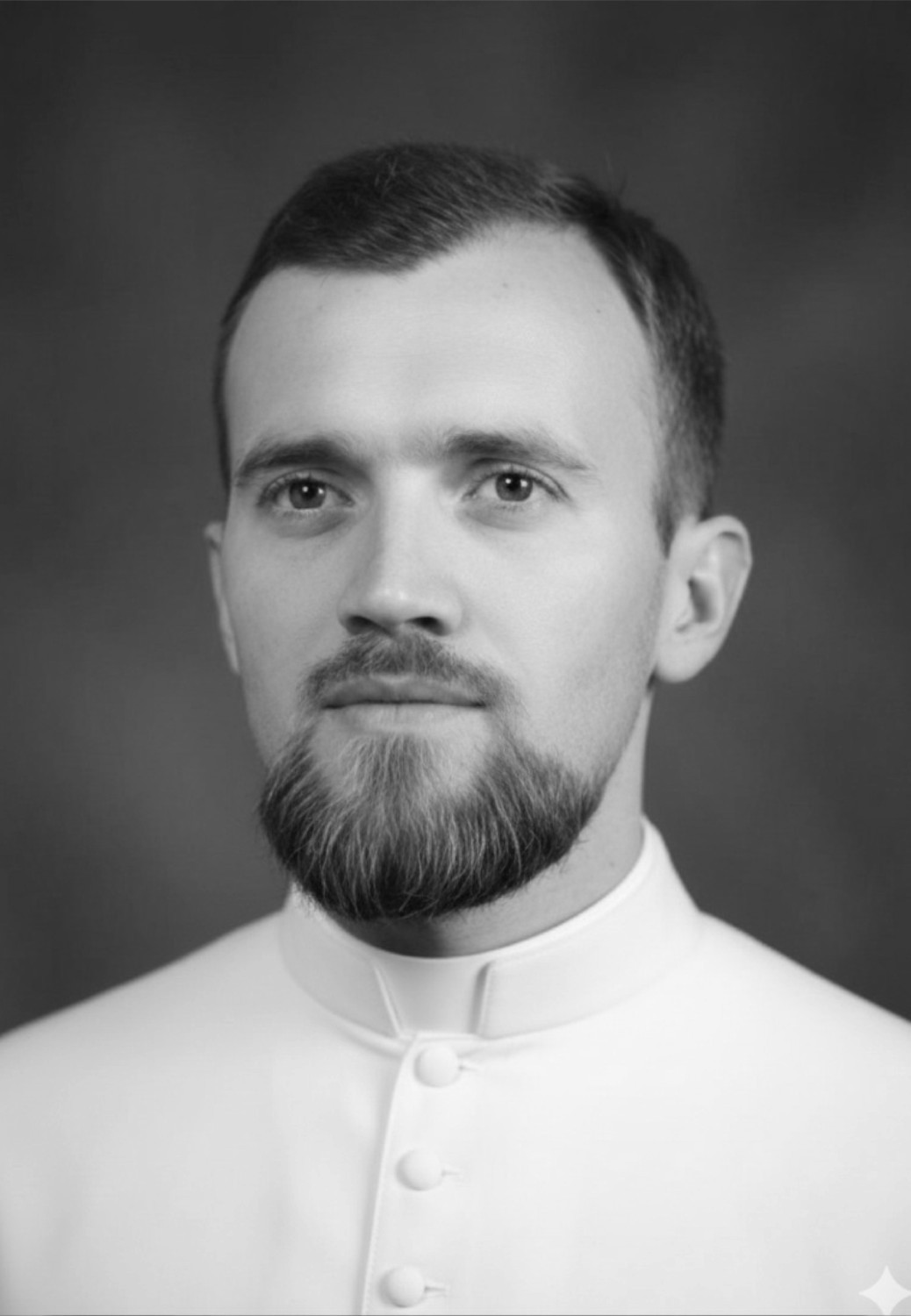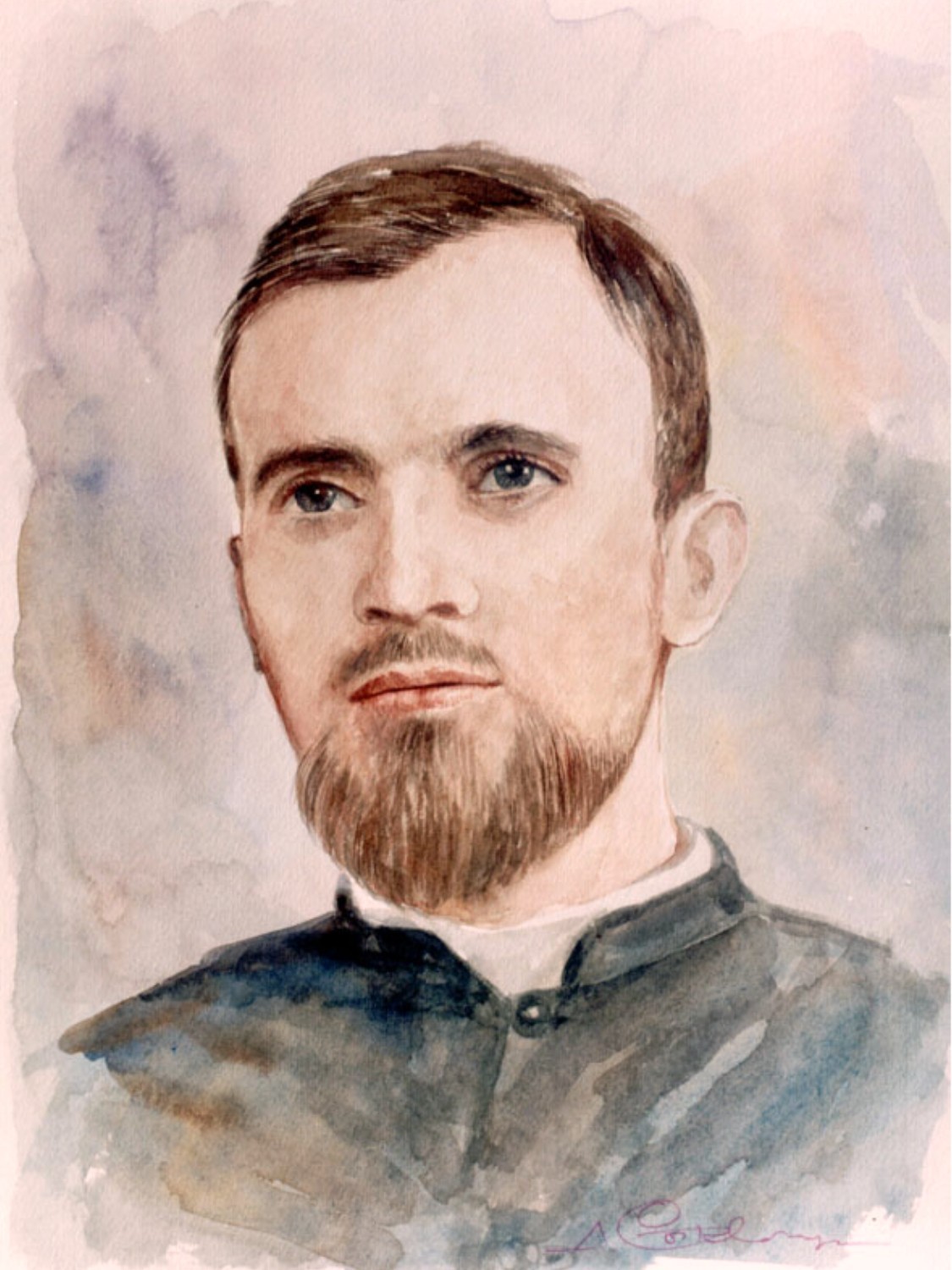


P. Luigi Carrara
Cornale di Pradalunga (Bergamo), 3 Marzo 1933
Baraka (R. D. Congo), 28 Novembre 1964
Missionario in Congo, ucciso durante la rivolta dei Simba, Di anni 31. (Sepolto a BARAKA - Zaire).
Nacque a Cornale di Pradalunga (BG) il 3.III.1933 da Giuseppe e Rossi Felice Elisabetta, settimo di dieci figli.
Nell’ottobre 1947 entrava nella Scuola Apostolica Saveriana di Pedrengo. Nonostante le difficoltà che provava nello studio, su incoraggiamento dei Superiori, che notarono in lui buone qualità di spirito e ottima maturità, continuò gli studi in vista del Sacerdozio Missionario.
Professo il 12.IX.1954, fu ordinato Sacerdote a Parma nella nuova Cappella della Casa Madre il 15.X.1961, assieme a 25 Confratelli, per le mani del Vescovo Saveriano Mons. Dante Battaglierin.
Il 9.IX.1962 partiva Missionario per il Congo Kinshasa (oggi Congo). Le testimonianze dei Confratelli e le lettere che egli scrisse durante i due anni di Missione dimostrano quanto egli fosse di indole buona, dotato di particolare spirito di sacrificio. Nella regione zairese del Kivu egli lavorò a Uvira, a Fizi, e quindi a Baraka.
Fu ucciso barbaramente a Baraka il 28.XI.1964 assieme al Confratello Fr. Vittorio Faccin dallo stesso colonnello ribelle che nel pomeriggio a Fizi uccise il P. G. Didonè e l’Abbé locale Joubert.
Nel 1974 fu pubblicato, a cura di P. Vittorino Martini, un volume dal titolo Sangue sul lago: in esso è riportato il racconto, fatto dal P. Cima, della tragica uccisione del P. Luigi Carrara:
“… Il colonnello Abedi Masanga, un Babembe del clan dei Balala, il 25 novembre scorso aveva subito una sconfitta terribile tesagli dalle truppe regolari coadiuvate dai mercenari: ben 700 suoi uomini Simba erano stati falciati dalle mitragliatrici!... Il giorno dopo egli dovette giustificare davanti ai parenti dei morti quella sonora sconfitta: tra l’altro essi erano stati uccisi dai bianchi e certamente - era l’accusa comune in quei giorni - guidati dalla "fonì" (la radio) che i Missionari dovevano avere nascosta in qualche angolo della Missione... Una giustificazione per il clamoroso insuccesso patito fece nascere in lui l’idea di uccidere i Padri! Il mattino dei 28 novembre l’Abedi arrivò con la sua jeep a Baraka ... Fr. Vittorio Faccin usci di casa; l’Abedi cominciò a tirar fuori la storia della "fonì"... della politica contraria alla Rivoluzione Popolare. Il Fratello lo lasciava dire, convinto che, come già altre volte era avvenuto, l’Abedi si sarebbe alla fine calmato. Ma questa volta l’Abedi non si calmò affatto: ...uno, due, tre colpi raggiungono al petto Fr. Vittorio: egli cade a terra privo di vita!... Il P. Carrara, intento a confessare alcune vecchiette cristiane, ha tutto visto e sentito. Si avvia sicuro verso l’Abedi, indossando ancora la stola violacea della confessione. Vedendolo arrivare così sereno, l’ira dell’Abedi si riaccende di nuovo...: ‘Ti porto a Fizi, per ucciderti con gli altri Padri..."! P. Luigi gli risponde calmo: "Se mi vuoi uccidere, preferisco morire qui vicino al Fratello...". Furono le sue ultime parole; non aggiunse altro; non attese risposta. Si inginocchiò per pregare...: l’Abedi lo colpì con la sua arma mentre pregava inginocchiato a pochi passi dal corpo ormai esanime del Fratello...!".
Fr. Luigi Carrara
Cornale di Pradalunga (Bergamo), 3 Marzo 1933
Baraka (R.D. Congo), 28 Novembre 1964
A rebel leader shot Fr. Luigi Carrara at close range just outside the church in Baraka (Congo) on Nov. 28 1964. On the same day, Br. Victor Faccin, Fr. John Didonè and Abbè Anastasio Joubert were killed. Fr. Luigi was 31 years old, born at Cornale di Pradalunga (Bergamo) on March 3 1933.
Luigi (affectionately called Gino) Carrara was the seventh of ten children, three of whom died in their infancy. He entered the Xaverians at Pedrengo in 1947, when he was 15 years old, in a community of 80 young missionary students, welcomed by Fr. Eugenio Morazzoni. At the end of secondary school, Luigi was rather worried about his ability to cope with the higher-level studies, but Fr. Morazzoni, aware of his spiritual and intellectual qualities, and his good will, reassured him that everything would work out well for him. He professed religious vows at S. Pietro in Vincoli on Sept. 12, 1954, and went to Parma where he studied Theology. He was ordained priest on Oct. 15 1961 by bishop Dante Battaglierin, in the newly-built Chapel of the Mother House.
In a letter to his family dated Jan.1 1962, Father Luigi Carrara informed his parents of his destination to the missions: “I have great news to share with you: I have finally received my destination to Congo! Be happy and rejoice with me! Just one year after my ordination I am leaving for the missions, to work in the Lord’s vineyard among the most needy!” He arrived in the diocese of Uvira, on Sept. 12 1962, together with Frs. Arrigoni and Veniero To help him get used to his new surroundings, he moved around different missions during his first months (Uvira, Usumbura, Kalambo) to name but a few of the places from where he wrote to his family.
The two years he spent among the Congolese made extremely heavy demands on him. His letters bear witness to his profound and sincere joy at being a missionary, but they also make clear that he was aware of the difficult nature of the task entrusted to him. He worked in Baraka, with Frs. Giavarini and Veniero (Dec. 9, 1962) and in Fizi (1963).
Father Luigi was an attentive observer and reflected on his new surroundings and the people. In his writings, he defines the Congolese as “simple people with many defects and virtues. Almost all of them are non-Christians, and the few who have converted to Christianity still retain much of their previous beliefs and behavior.” With regard to missionary work, he pointed out that even “when it is really efficient, it will always be too little. We are surrounded by so many who have no strong desire for conversion.” In spite of this, he was neither resigned nor discouraged. During Holy Week in Fizi, he heard confessions for not more than three hours, a sign of the lack of numbers. On Easter night, however, “our small church was full: about seventy catechumens were baptized, with two long lines stretching from the sanctuary to the central door. After the baptisms we celebrated some weddings and imparted nuptial blessings. The singing added to the solemnity of the occasion. Some catechumens had traveled 20 miles to be present, and we hope that they will take the same enthusiasm back to their villages and attract others to the Church.”
In his evangelizing activity, Father Carrara obtained the greatest satisfactions in the hinterland: “I have found an incredible faith among these people. Every able bodied Christian was present at the meeting, some of them after journeys of four, five, and even six hours; there are mothers with children on their backs, old people with their sticks, and a crippled woman who had walked from the most distant missions for the pre-baptismal scrutiny: my heart was moved to pity at this sight.” He was also struck by the condition of the Congolese women: “They do all the heavy work, like hoeing, gathering and chopping wood, and carrying heavy weights on their shoulders. The men, instead, go fishing and idle about. This is how women are treated, and a long time will pass, and much energy will be expended, before they become aware of the true dignity of women.”
In the midst of this, the Mulelist rebellion and the National Movement for Liberation. Tension, heightened by fear, began to spread among the Simba ranks and they set their sights on the missions of Baraka and Fizi. Father Carrara decided to move from Fizi to Baraka to provide Brother Faccin with company and support. The two Xaverians had to abandon the mission house on the hill and take up residence in the house nearer to the lake. This move was made necessary by the threats of the Simba, who had begun to accuse the missionaries of making secret contacts with Mobutu’s soldiers via a non-existent radio transmitter. The guerrillas were intent on plundering the mission base on the hill, and Brother Faccin immediately set about building a slightly more comfortable house not far from the new church and close to the lake. Hostility towards the missionaries was increasing.
At the beginning of Sept.1964, a Christian family of the nearby village of Matara offered hospitality to the two missionaries, reserving them ample space in their hut. Then, that ill-fated Nov. 24 1964, when 700 rebels were killed by armored vehicles, and four days later, the rebel leader Masanga shows up at Baraka.
The last moments of life of the Martyrs of Congo were reconstructed on the basis of the testimony of some local inhabitants, some two years later, upon discovery of their bodies. On November 28, at about 9 am, a jeep pulled up in front of the fathers’ house. Abedì Masanga, a guerrilla leader, drove it. Brother Faccin was in his room when he heard the coarse voices of the Simba (lions) guerrillas outside. He went outside, certain that he would be able to convince them to leave as on previous occasions... When they reached the church, Brother Faccin was told that they would be heading for Fizi, and he understood that something dreadful was about to happen. “I cannot leave Father Carrara alone in Baraka,” he replied, as he opened the door to get out. They were his last words: Masanga shot him three times in the chest and he fell dying on the car seat. Father Carrara, who had been hearing the confessions of some elderly women, had seen and heard everything. He went towards Masanga, his purple penitential stole still around his neck. “I will take you to Fizi to kill you and the other missionaries together,” shouted an enraged Masanga. “If you want to kill me, I prefer to die here next to my brother,” the missionary serenely replied, as he knelt down next to the body of Brother Faccin. He was shot at point blank range and fell dead next to Br. Faccin.
“Fr. Luigi Carrara, born in Cornale, Bergamo (Northern Italy), on March 3, 1933, worked as a Xaverian Missionary in the Congo where he died a martyr’s death on November 28, 1964.” These few biographical details of the brief, but intense, life of an authentic witness to the Gospel, are inscribed under the bronze monument that the townsfolk of Luigi Carrara erected in his memory outside the parish church.
Père Luigi Carrara
Né à Cornale di Pradalunga (Bergame – Italie) le 03.03.1933
Décédé à Baraka (R.D. Congo) le 24.11.1964
31 ans. Missionnaire en RDC à Fizi
Mourir avec le Frère.
Luigi naît à Cornale di Pradalunga (Bergame) le 03 mars 1933. A 18 mois, il fut atteint de pneumonie, courant le risque d’être le quatrième enfant de la maison à mourir. Sa mère raconte :Il était au point d’aller au Paradis. Alors, je suis partie dans la chambre chercher l’habit blanc de son baptême. Je l’ai couvert. Nous avons prié autour de lui, avec quelques amies. Dans mon cœur, je suppliais Dieu en disant que s’Il guérissait mon fils, je le lui aurais donné pour son service.
Il entre dans la communauté des missionnaires xavériens de Pedrengo (Bergame) à l’âge de 14 ans, le 06 octobre 1947. Il fait ses premiers vœux religieux à San Pietro in Vincoli (Ravenne) le 12 septembre 1954. Il fait son école secondaire à Desio et sa théologie à Parme. Dans toutes ses communautés, Luigi révèle son tempérament doux et serein, ainsi que son esprit de piété et de prière. Il sera ordonné prêtre le 15 octobre 1961. L’année suivante, le 09 septembre 1962 il part au Congo.
S’en suivent vingt sept mois intenses de mission, trois à Kalambo pour l’étude du kiswahili et deux ans à Fizi (Uvira) où, avec le père Giovanni Didonè, il rassemble les premières pierres vivantes de l’Eglise de Fizi.
Il effectue un seul safari à l’intérieur, dans la succursale de Ngandja, du 25 janvier au 03 février 1964. C’est sa lune de miel. Les plus grandes satisfactions du point de vue de l’évangélisation lui viennent des communautés de l’intérieur. Je suis émerveillé en voyant la foi de nos chrétiens des succursales. Tous, sauf les malades, cherchent à participer aux liturgies. Parfois ils font quatre et même six heures de route à pieds pour nous rejoindre. Je vois venir les mamans avec leur bébé au dos et les vieux avec leur bâton. Je me rappelle avoir vu de mes yeux une vieille estropiée qui marchait en tremblotant. Elle venait de l’endroit le plus reculé de la mission pour passer le test d’admission au catéchuménat en vue de recevoir les sacrements d’initiation chrétienne et le sacrement de mariage. (…) Jeunes ou adultes, personne n’avait encore vu un prêtre de ce côté-là. Aucun prêtre n’avait encore songé parcourir ces villages et passer sur ces sentiers… Tous donc m’observaient, m’accompagnaient et me suivaient sur un long trajet.
Quelques mois après cette lune de miel… Gethsémani. En 1964, quatre ans après l’Indépendance du Pays, un mouvement de guérilla guidé par Pierre Mulele prend possession de la plaine de la Ruzizi, dans l’axe reliant Bukavu à Uvira. Les mulelistes contrôlaient aussi Baraka et Fizi. Pendant trois mois ils eurent la situation en main. Ensuite, ils durent subir les premières défaites, vaincus par les forces armées du général Mobutu, avec l’aide de mercenaires blancs qui bombardaient le territoire avec leurs avions T28 et B26. La colère monta chez les mulelistes. Ils soupçonnèrent les Xavériens de Baraka et de Fizi d’informer, par radio, l’armée régulière de l’avancée des troupes mulelistes. A Baraka, le frère Faccin était resté seul. Le père Carrara était donc descendu de Fizi lui prêter main forte. Il passait toute la journée en prière dans l’Eglise que le frère était en train d’achever. Les deux confrères étaient les seuls étrangers résidants à Baraka.
Le père Carrara écrit à ses amis en Italie : Priez ! Faites prier ! Puisque, de même que votre christianisme est le fruit de tant de martyrs, de même ici la foi chrétienne atteindra la plénitude de sa perfection en versant le sang.
Le 28 novembre 1964, le colonel Abedi Masanga, se présenta à la mission de Baraka et tua d’abord le frère Faccin. Pendant ce temps, le père Carrara était en train de confesser à l’église. Ayant vu le meurtre, il sortit à la rencontre du colonel, l’étole violette au cou. Le colonel le menaça : Je t’emmène à Fizi pour te tuer avec les autres prêtres. Le père Carrara lui répondit calmement : Si tu veux me tuer, je préfère mourir ici près de mon frère. Il s’agenouilla à côté de la dépouille mortelle pour prier. Un seul coup de revolver à la poitrine suffit et le père Carrara acheva son séjour terrestre.
Les lettres qu’il adressait à ses amis, ainsi que le témoignage de ceux qui l’ont connu, manifestent sa bonté et son esprit de sacrifice. Les chrétiens de l’Ubembe, en parlant du père Carrara, lui attribuent les mots mêmes de l’Ecriture quand elle parle de Moïse : C’était un homme très humble, l'homme le plus humble que la terre ait porté (Nb 12,3).
(cf. A. COMUZZI, Luigi Carrara, in R. AGASSO, A. COMUZZI, A. LUCA, Con loro, sempre. Missionari Saveriani martiri della carità pastorale, éd. CSAM, Brescia 2000)