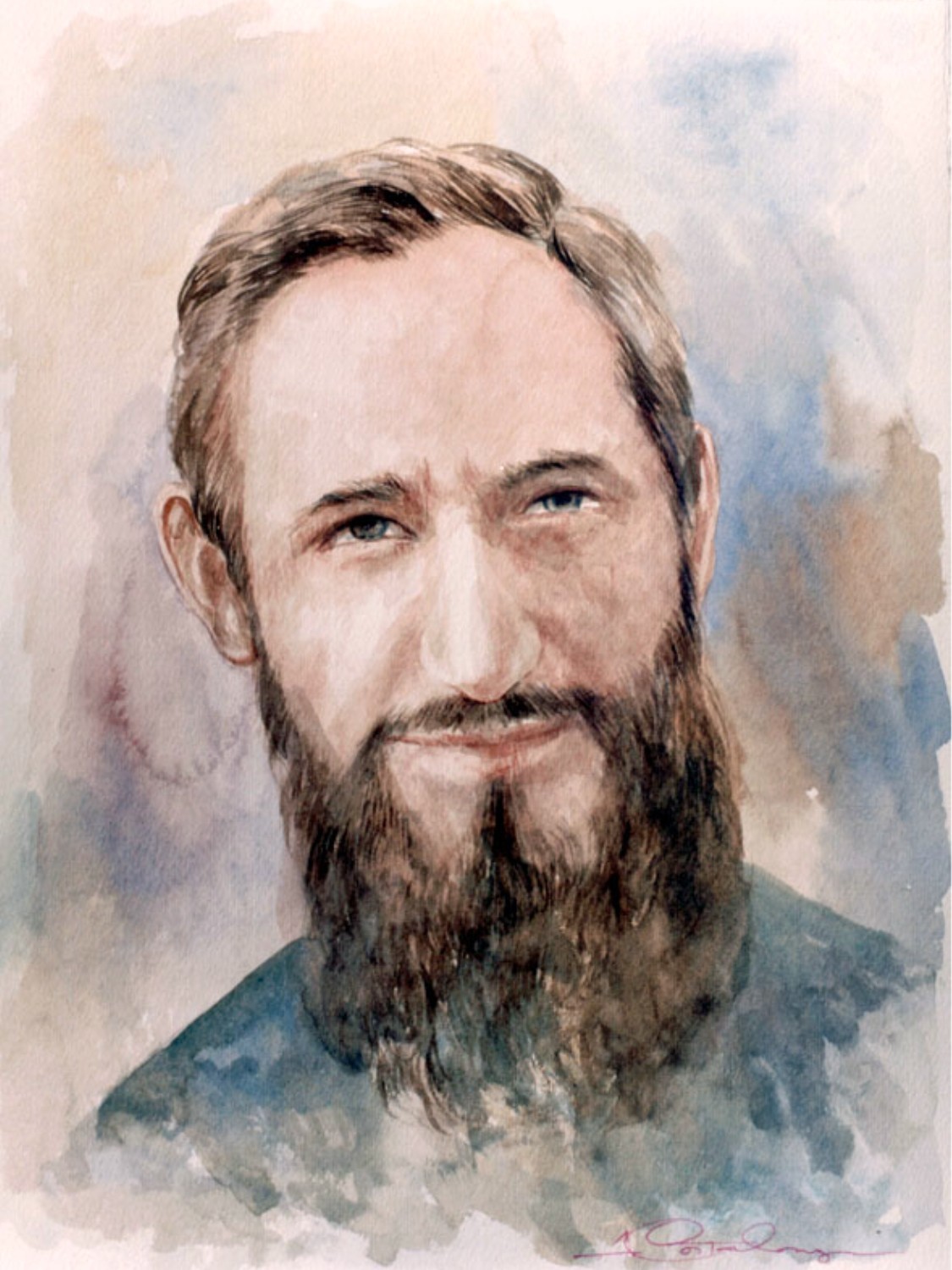


P. Mario Veronesi
Rovereto (Trento), 10 Novembre 1912
Jessore (Bangladesh), 4 Aprile 1971
Il P. Mario Veronesi era nato a Rovereto (Trento) il 10 novembre 1912 da Germano ed Albina Passamai ed aveva deciso di farsi missionario quando aveva circa 25 anni ed era presidente di giovani di Azione Cattolica ed animatore dell’Oratorio “Rosmini” della sua città.
In tre anni di studio impegnativo si preparò e superò gli esami di ammissione al liceo e subito dopo (agosto 1941) entrò nel Noviziato Saveriano di S. Pietro in Vincoli (Ravenna), ove emise la sua Prima Professione l’8 settembre 1952. Passato a Parma per il liceo e la teologia, vi dimostrò il suo spirito di sacrificio, la sua capacità di donarsi agli altri, il suo amore alla preghiera. Egli emise in quella sede la sua Professione perpetua il 15 settembre 1945 e vi fu ordinato presbitero il 7 marzo 1948.
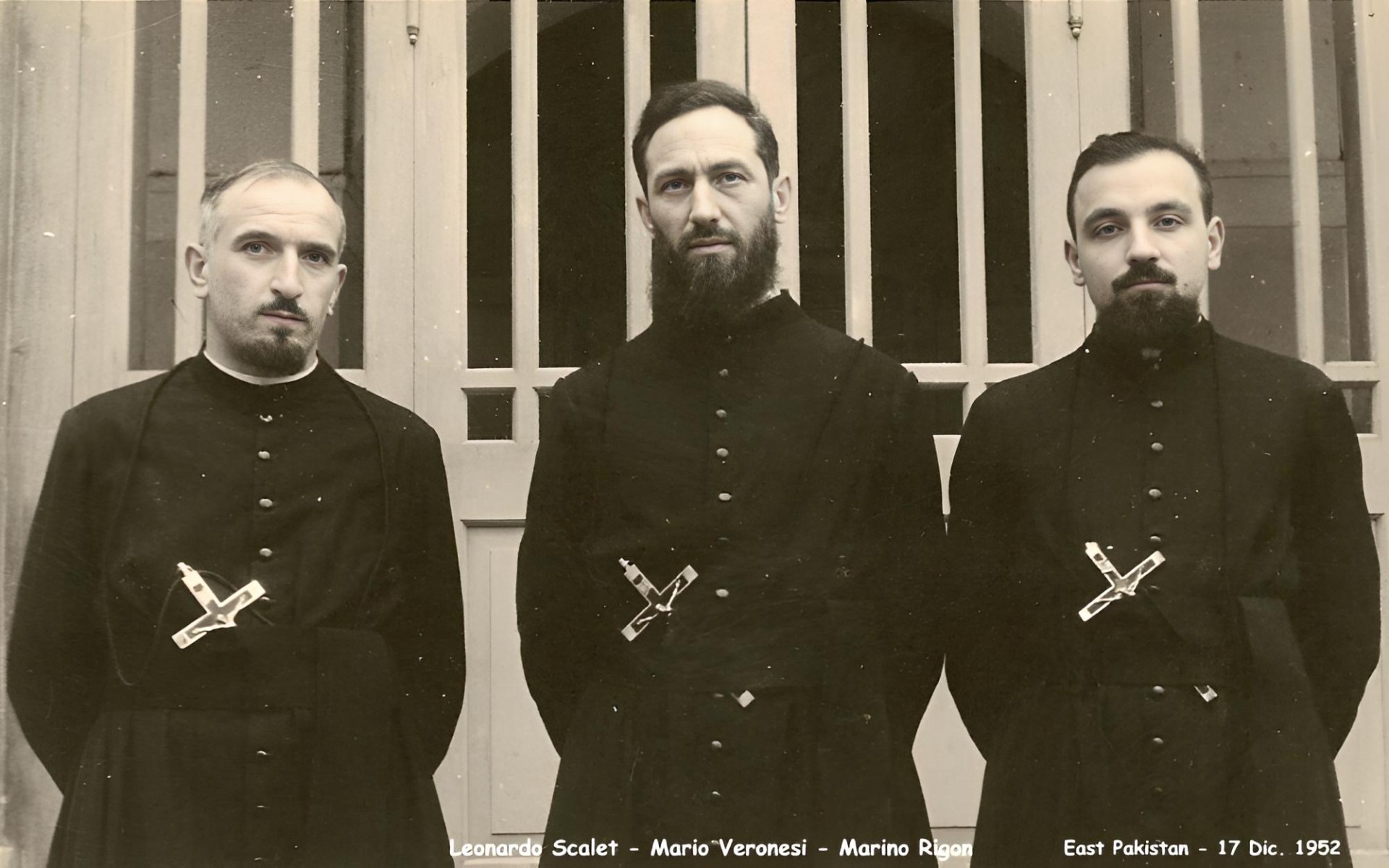
Dovette attendere fino al 17 dicembre 1952 per partire per la Missione. Fu inviato in Bangladesh (allora Pakistan Orientale) nell’attuale diocesi di Khulna. Partì sprovvisto di lauree e di diplomi, ma ricco di un grande cuore, pieno di quel genuino amor di Dio che si esprime in amore per il prossimo e che trovò là l’ambiente adatto per esplodere nella pratica delle opere di misericordia. Né gli mancarono occasioni di farlo soprattutto quando inondazioni, cicloni, carestie devastavano quel Paese. In una di quelle disastrose situazioni non esitò ad alloggiare in chiesa la gente le cui case erano sommerse dalle acque.
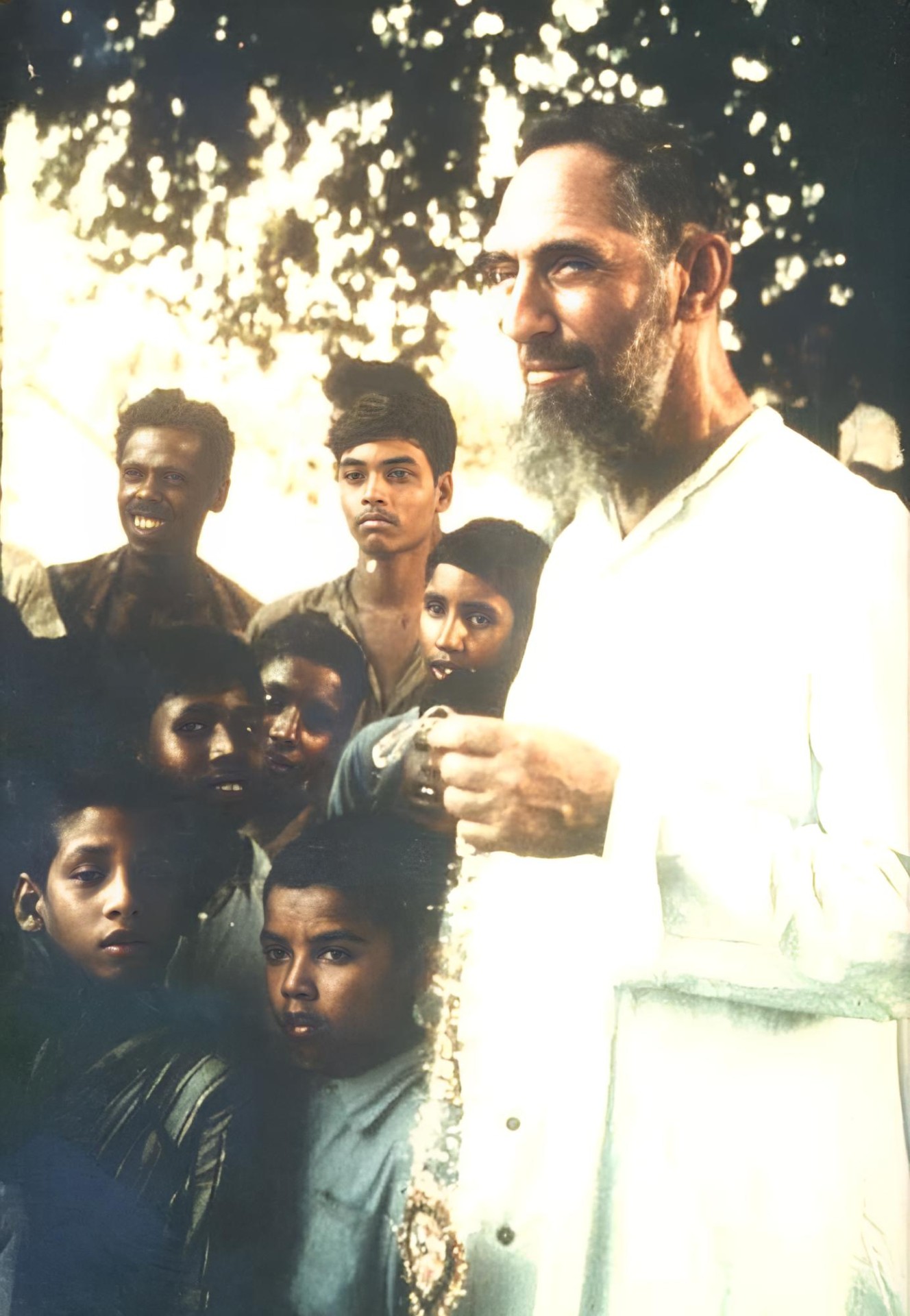
Per quel popolo e per quel paese, dove lo spettro della fame è continuamente incombente, egli si cavò spesso letteralmente il pane di bocca per darlo a qualche affamato e spese ogni giorno le sue energie di Apostolo del Vangelo e di fratello innamorato dei fratelli. La sua carità non aveva limiti. Studiava sempre qualche nuovo progetto per aiutarli a vivere. Fece scavare del serbatoi per l’acqua; procurò della canne di bambù, per chi voleva costruire stuoie o ceste; materiale per fabbricare borse che poi, vendute, davano modo di mantenere le famiglie.
Il popolo lo stimava, lo amava e lo riteneva un santo ed attribuiva avvenimenti straordinari alla sua preghiera ed alla sua benedizione.
Il Martirio
Alla sua carità mancava solo la donazione totale della sua persona, ma questa non tardò ad arrivare. L’occasione si presentò quando il 25 marzo 1971 scoppiò in Bangladesh una sanguinosa guerra civile che seminò centinaia di migliaia di morti e causò il più grande esodo di profughi registrato nella storia: circa dieci milioni di persone fuggite nella vicina India.
Ci furono morti e feriti ovunque fino dal primo giorno e non mancarono nemmeno nella cittadina di Jessore non lontano dalla quale c’era un grosso accampamento militare. Il 3 aprile i missionari di quella località pregarono il P. Veronesi, che si trovava a Shimulia, un villaggio distante una quindicina di chilometri, di andare in loro aiuto per tranquillizzare la gente, soccorrere i feriti, dare una mano per i problemi che si presentavano di momento in momento.
Egli non esitò nemmeno un istante e partì immediatamente assieme al P. Cobbe, suo aiutante nella Missione. Quando arrivò a Jessore e si rese conto della gravità della situazione e dei pericoli incombenti, rimandò il P. Cobbe a Shimulia e, pur sapendo dei pericoli a cui andava incontro, decise di non lasciare soli i confratelli, le suore e la gente.
E restò.
Il giorno seguente, 4 aprile, Domenica delle Palme, attese alle confessioni per tutta la durata della messa della benedizione delle palme, poi celebrò nella cappella delle suore. Nel pomeriggio si recò nell’ospedale civile per confortare i degenti, prelevare una malata e trasportarla nell’ospedale della missione per un intervento chirurgico. Fu il suo ultimo atto di carità. Dopo aver consegnato la donna alle infermiere, posteggiò l’ambulanza e si accinse ad entrare nella residenza per mangiare un boccone.
Aveva appena aperto il cancelletto che due soldati pakistani, penetrati nel recinto della missione, lo fermarono puntandogli contro le loro armi. Egli alzò immediatamente le braccia ma, nonostante ciò ed il fatto che portasse visibilmente il bracciale della Croce Rossa, gli spararono brutalmente al cuore. Cadde a terra con la braccia aperte, come un crocefisso.
Ora la sua salma riposa davanti alla chiesa del villaggio di Shimulia dal quale era partito per il suo generoso atto di carità e la sua tomba é sempre coperta di fiori e visitata da tanta gente che si raccomanda alla sua intercessione.
Fr. Mario Veronesi
Rovereto (Trento), 10 Novembre 1912
Jessore (Bangladesh), 4 Aprile 1971
Fr. Mario Veronesi, a missionary to East Pakistan (Bangladesh) for 19 years, was gunned down on April 4 1971 by West Pakistan soldiers as he tried to calm panic-stricken people who were seeking refuge within the mission compound of Jessore. The soldiers began firing into the house as Fr. Veronesi walked out with his hands up, wearing a Red Cross badge. The troops then entered the church and shot four more people.
Fr. Mario Veronesi was 58 years old, born in Rovereto, Trento (Northern Italy), on Nov. 10, 1912, the son of Germano Veronesi and Albina Passamani, who already had five children, four sons and a daughter. Mario first attended the primary school in Rovereto. At the end of his school career he found work as a shop assistant in a grocery. He was an honest, intelligent and hard working young man. He spent his free time at the Rosmini oratory. At the age of fifteen he was in charge of the aspirants and, four years later, he was president of the youth section of the Catholic Action Association (1931). His friends remember him as a determined, plucky and courageous person. The Rosmini oratory, The Catholic Action Association and the parish were second home to Mario. There his faith was nourished and became stronger each day. He never forgot these early experiences and would remember them in his letters from Bangladesh to the friends who had shared this experience with him.
On April 27, 1940, he wrote to the Xaverians in Parma, expressing his desire to join the Congregation. He was 27 years old at the time, and he wrote: “I am convinced that the Lord is calling me to the missionary life. I ask you, most Reverend Father, to accept me into your Congregation. I hope that my age will not be considered an impediment. I will do my best to make up for lost time by acquiring all the knowledge needed to become a good missionary. I promise to obey faithfully whatever my future superiors command me to do and welcome this as the will of God.” His first attempt failed. The superior of the Xaverians told him to try elsewhere, perhaps the Salesians would accept him.
He sought the advice of his spiritual director and then wrote once again to the Xaverians, “I have no wish to join the Salesians. I knocked at the door of the Xaverians because I hope, if it is God’s will, to join those missionaries who are spreading the Gospel in China”. His stubbornness and determination paid off this time: the Xaverians accepted his application. On Aug. 14, 1941, Mario Veronesi entered Novitiate under the direction of Father Giuseppe Gitti, who had worked in China. The Novice Master thus described him: “He possesses a good, strong and docile temperament; an excellent piety and religious spirit, together with a strong will that shall enable him to overcome any difficulty in order to achieve his goal.”
On Sept. 8, 1942, while the world was in the throes of war, Mario Veronesi made his First Religious-Missionary Profession. He then went to Parma to study Theology. In July 1945, he wrote to the Superior General for application of Perpetual Vows: “The three years I have spent in religious life have convinced me of the value of the decision I took at my First Profession. I am fully aware of the serious nature of the step I am about to take; I am certain, however, that with the grace of God, who has never abandoned me in past difficulties, will help me to remain faithful to my commitment. I know only too well that I have no titles or merits to boast about, and I do not deserve the graces that have been bestowed upon me. I only ask you to consider favorably my sincere desire and firm intention to dedicate my life entirely to the religious and missionary life.” On Sept. 12, 1945, Mario Veronesi made his Final Religious Profession; three years later, on March 7, 1948, he was ordained priest by bishop Evasio Colli in the Cathedral of Parma.
He first served in Parma, and then he was sent to Ancona in July 1950 as rector of the junior seminary for two years. The year 1952 was marked by four important events of his life: a pilgrimage to Lourdes in August, his resignation as rector, the opening of a new Xaverian mission in East Pakistan, and his destination to the same. On Nov. 24 1952, his family bade him farewell at Rovereto railway station.
After a period in Jessore for language studies, Father Veronesi was sent to the biggest parish, in Khulna, which was later divided into two communities, Shelabunia and Baniarchok. He wrote to the superior General from Khulna on Feb. 1, 1953: “My district includes almost half the diocese. There are two of us here, but Father Aldo Guarniero is always busy at the school. Almost a year ago I asked to be allowed to go the missions, and my wish was granted. I am happy to be here and I am grateful to you and our Heavenly Mother for granting my request. I hope to spend the rest of my life in this country.” In a letter to a friend he wrote, “It is one thing to be poor, but downright misery, which means sometimes having nothing to eat, is certainly not good for the soul. We do what we can to help the people satisfy their material needs, but we do not have enough money. Our hands are tied and we suffer at the sight of so much suffering all around us.”
In the year 1954, East Pakistan suffered severe flooding that lasted almost two months. Father Mario, who was in the midst of them, later described the apocalypse: “The swollen waters of the river Gange have wrought havoc here, as in so many other parts of East Pakistan. Water has invaded the houses, eroding their foundations and causing them to collapse at the first wind. The people are engaged in a desperate struggle against the water and hunger. The water has also invaded my small church. Today is the feast of the Assumption and the sun is shining. I celebrated Holy Mass on the veranda of my room with a congregation of Christians in their small boats. About forty of them... My Christians have a strong faith and their calm and serenity are admirable. The children spread joy all around with their innocent and merry frolicking in the water; they do not yet understand the magnitude of what has happened, and the adults keep their anguish to themselves.”
In the words of Father Garello: “He did not sit around theorizing. He went straight to the most affected areas and understood immediately what he had to do in order to bring the people some relief.” He was also entrusted with the building of the first cathedral of Khulna which would later become a diocese. In 1956, he took part as an elected delegate in the sixth General Chapter of the Xaverians. In December, much to his disappointment, he became religious superior, but he accepted it as God’s will. Father Mario Veronesi did not have an easy character. He demanded much of himself and others.
On February 7, 1960, Father Mario Veronesi celebrated his first Mass as parish priest of Bhoborpara, a large peasant village not far from the border with India. He had two Xaverians, Fr. Albino Tessaro and Fr. Benedetto Rota to help him. After a brief period in Italy, he was appointed parish priest in Baniarchok. In May 1965, a powerful cyclone hit East Pakistan, leaving even more death, destruction and hunger behind it. Father Mario was once again among the poor, inventing so many ways of helping them in their plight, asking his friends in Italy to help, sharing his own food with those in need. He was appointed parish priest at Shimulia, where he served from July 6 1966. He was now among the lowest people of the Hindu untouchables, the outcasts known as the Muci. In a letter, he remarked: “As long as I can work I still consider myself a young man; with the grace of God, I hope to be able to do at least some good work among these people.” Hunger was the main problem of the people. This is where he worked with Fr. Valerian Cobbe.
After another brief period in Italy, Fr. Mario returned to Pakistan, a country in the grip of political crisis caused by the Independence movement, and a fearsome hurricane which left more than half a million dead and widespread destruction and famine.
Fr. Mario Veronesi was one of the many victims of the civil war. On April 4, 1971, Palm Sunday, he was in the mission of Jessore, helping as much as he could the poor suffering people. Soldiers appeared and he stood in front of them, his arms spread wide in a gesture of defense of his people. He was shot in the chest and killed. He was 58 years old, and had been a religious for 28 years, 19 of which he had spent in Bangladesh. He was buried initially in Jessore then, later, his body was moved to Shimulia, where he was buried alongside Fr. Valerian Cobbe, who had been killed three years after him.