

P. Giovanni Battista Collini
Vergnacco (Udine), 16 dicembre 1911
Udine, 4 Maggio 1974
Missionario in Cina imprigionato, ed in Sierra Leone. Di anni 63.
Era nato a Vergnacco (UD) il 16.XII.1911 da un'umile famiglia della zona collinare precarnica. Dopo alcuni anni di studio nel Seminario Diocesano, a 17 anni, la sera del 31.X.1928 arrivava a Parma nell'Istituto di Mons. Conforti.
Pronunciati i Voti Religiosi il 3.XI.1929 e dopo l'Ordinazione Sacerdotale (11.1V.1936), trascorse alcuni mesi a Vallo della Lucania e poi a S. Pietro in Vincoli da dove chiese di partire per le Missioni.
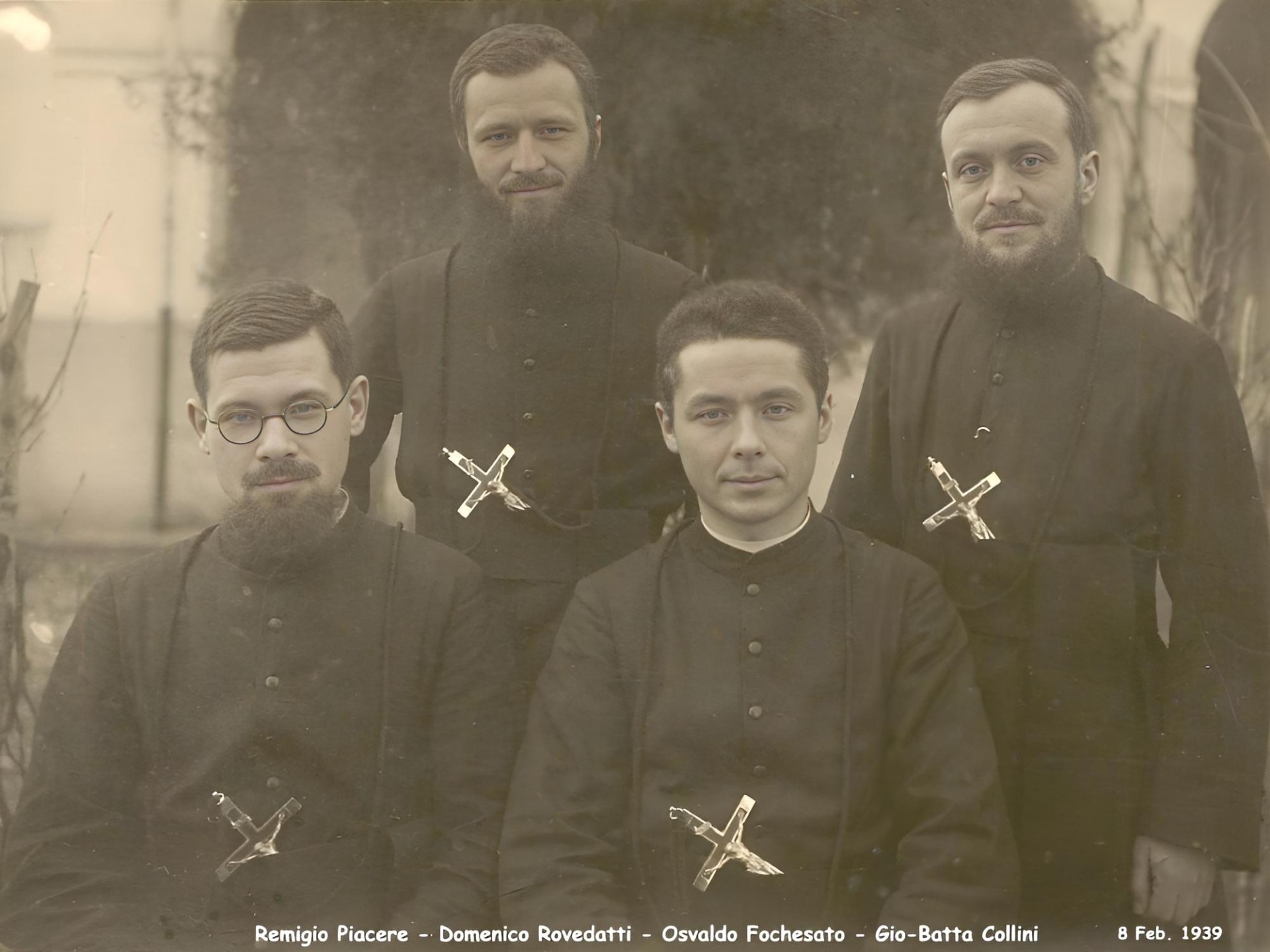
Imbarcatosi a Venezia sulla nave "Conte Rosso", l'8.II.1939 assieme ai PP. Remigio Piacere, Domenico Rovedatti e Giovanni Fochesato partiva per la Cina in un momento difficile politicamente e civilmente.
Per tredici anni egli fu in Cina una specie di "missionario volante", mentre già vari altri Padri venivano gradualmente posti a confino o in concentramento; lavorò a Nanyang, a Sichwan, a Cheng-chow, a Loyang (dove nel 1947 ricevette la notizia della morte della sua buona mamma), a Teng-Fong.
Fu proprio a Teng-Fong che il 30.III.1952 venne arrestato e tradotto in carcere assieme al P. Urbani ed al P. L. Ly cinese: di questi 18 mesi di carcere egli lasciò un diario dal quale traspare la sua forza spirituale ed il suo grande senso di sacrificio unito alla privazione di ogni forma di apostolato. Durante questi mesi venne sottoposto ad ogni forma di derisione psicologica e di falsa accusa. Fu accusato di opporsi al Governo, di aver fatto pressioni sui giovani, di aver fabbricato medicine false, di essere una spia del capitalismo vaticano... Condannato da un tribunale popolare venne espulso dalla Cina; il 23 novembre 1953 giungeva in Italia.
La sosta italiana fu breve. Per le sue insistenti richieste nel febbraio 1957 partiva per la nuova Missione Saveriana del Sierra Leone in Africa Occidentale; qui (a Kabala, a Makeni, a Lunsar, a Mange ed a Magburaka) lavorerà per oltre 17 anni unendo al ministero apostolico uno spiccato talento per l'adattamento, per lo studio dei costumi, dei dialetti, della mentalità e del folklore locale. Divenne il più esperto tra tutti i Padri, adatto ad introdurre i giovani Confratelli alla Missione.
Pochi giorni dopo il suo rientro in Italia per cure, nel pomeriggio del 4 Maggio 1974 moriva tragicamente in un gravissimo incidente stradale nei pressi di Udine: Dio lo chiamava al riposo eterno.
Fr. Giovanni Battista Collini
Vergnacco (Udine), 16 dicembre 1911
Udine, 4 Maggio 1974
In the afternoon of May 4 1974, Fr. Giovanni Battista Collini died of a tragic car accident close to Udine. He was 63 years old, born at Vergnacco (Udine) on Dec. 16 1911.
After a few years of studies in the Diocesan seminary of Udine, he joined the Xaverians at Parma at the age of 17, on Oct. 31 1928. Before entering Novitiate at Parma, he wrote in his diary: “Difficulties behind, I left. Everything was ready for those last days of October, but those heavy rains, those dark gray skies, and those cold winds gave me the chills… The train departed in that humid autumn day, a prelude to All Souls and its dead… Goodbye, mountains!” He professed First Vows on Nov. 3 1929 and after his priesthood Ordination of Apr. 11 1936, he spends a few months at Vallo della Luccania and S. Pietro in Vincoli.
On Mission Sunday, he wrote a letter to the Superior General: “Today’s celebration of World Mission Sunday justifies my request which I present to you… I think of the worrying condition of my family members and most of all at their deep pain in knowing about my departure; yet I know that they have Christian hearts who will generously renew their sacrifice to the Lord even among their tears… I offer myself with my ardent and youthful enthusiasm, aware of the considerable difficulties, sure of my vocation, and ask this costly and much-desired grace: to leave!” (Oct. 23 1938)
Assigned to China, he started the trip by boat “Conte Rosso” from Venice, together with Frs. R. Piacere, D. Rovedatti and G. Fochesato. He reached China in a very difficult political and civil moment, but he managed to be a “missionary on the run” while serving in different mission posts: at Nanyang, at Sichwan, at Cheng-chow, at Loyang (where he heard of his mother’s death in 1947), and at Teng-Fong. During his life, he kept a constant correspondence with Sr. Maria Francesca of the Carmel of Montegnacco; this is what he wrote: “Though invisible and unperceived, the echo of your prayers and your virtuous deeds resounds from your close cenacle to the ends of the earth… We are not discouraged; instead our hearts are moved in gratitude to God for having chosen us for this awesome ministry of working and suffering in order to bring Him these wandering children.” (May 17 1939)
On March 30 1952 he was arrested and put in prison, together with Frs. Urbani and Ly, for 18 months. He even wrote a diary during this time, which shows his deep spiritual strength and his great sense of sacrifice. Condemned by a popular tribunal, he was expelled from China, and reached Italy on Nov. 23 1953. A paragraph from his diary reads: “While in prison, I found a calmness and a personal availability to the will of God which I would consider a most special grace. If God wanted us to forsake our life, we were ready to give it in China. I want to be at his service forever, whatever the Lord will ask me… The pains were real, and we thank God for allowing us to suffer for his and our cause. Nothing was lost, even the little good we could do in those difficult and baffling conditions of life in prison. They could not have harm us, because of the attitude of the people, and our own behavior…” (Dec. 16 1953)
His Italian visit was a short one, for after 4 years of service, he was assigned to Sierra Leone, West Africa, where he worked the last 17 years of his life: at Kabala, Makeni, Lunsar, Mange and Magburaka. He was an excellent learner of local traditions and costumes, of dialects and ways of thinking, of local folklore, becoming “the”expert among the Xaverians in introducing the new missionaries in the field.
He was not a missionary of great buildings or external accomplishments. Fr. Collini never even care about these, because he felt that his work was more on the interior of the soul, directly touching the heart. He recalled what the Founder wrote for him on the day of his profession: “Do not despise small things if you want to advance in your religious state.” In another page of his dairy, he wrote: “I am afraid to do less than what I should. It is useless to tell me not to worry: it’s almost like an instinct, a need. It is useless to repeat that God does not ask for impossible things. At the end of the day, as I do my examination of conscience, I notice that I should have done more, and better. I cannot remain indifferent in front at the urgency, at the tragedies of soul and body, with which I deal daily.” (Dec. 11 1960) May the soul of this faithful and zealous missionary of the Lord rest in peace.