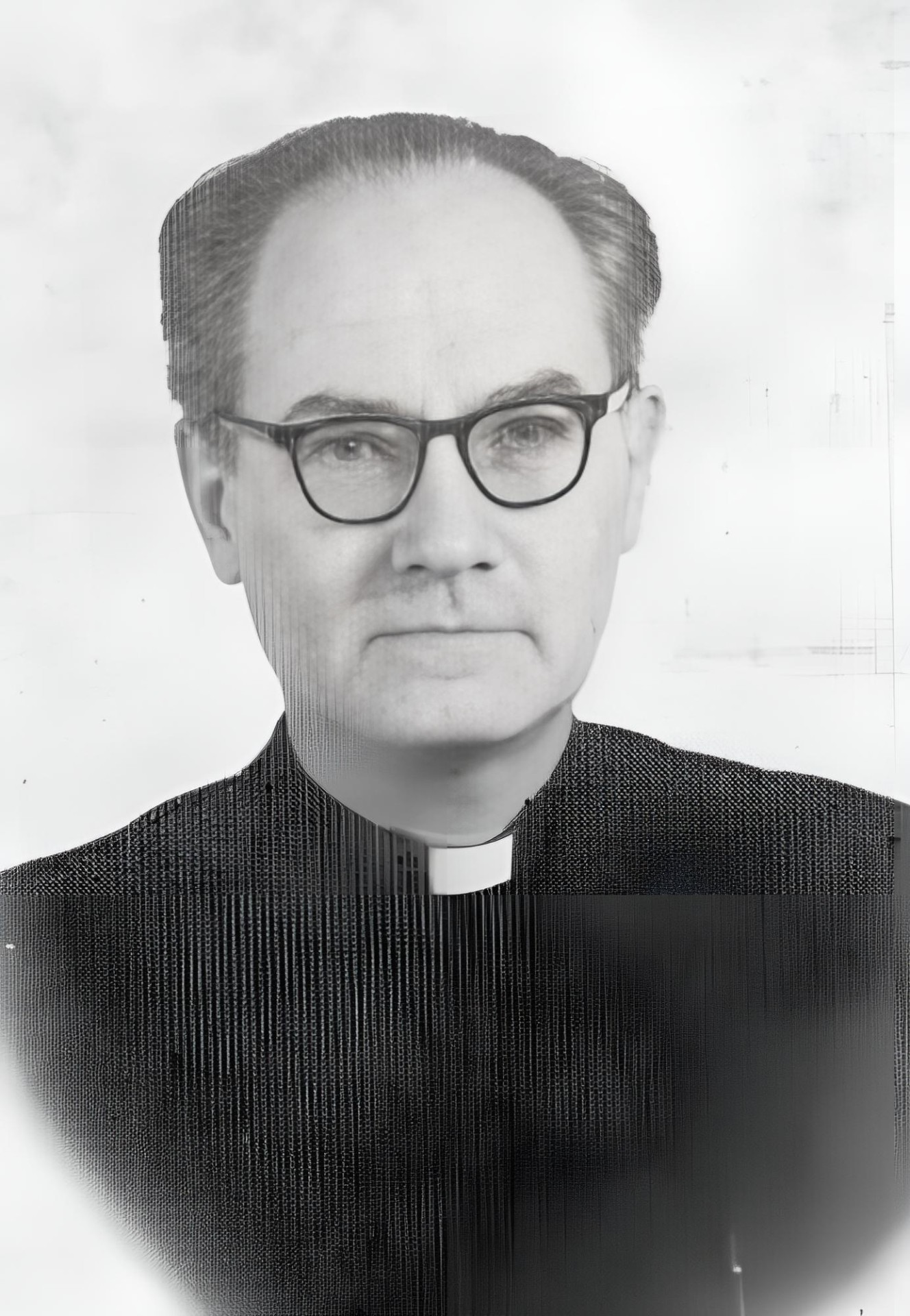


P. Lucino Piacere
Villa del Ferro (Vicenza), 12 gennaio 1916
Roma, 15 giugno 1977
Formatore di Missionari, Insegnante, Missionario in Giappone. Di anni 61. Sepolto al Paese d'origine
Il P. Lucino Piacere, Consultore Generale per la Formazione, è morto per infarto a Roma la sera del 15.VI.1977. La salma venne trasportata a Parma per la Liturgia Funebre e quindi al Paese d'origine dove fu tumulata. Nella Messa esequiale, il Superiore Generale, Mong. G. Gazza tratteggiò la figura e l'attività del P. Lucino con queste parole:
".... Vivere e credere nel Signore. Questa è la costante che dà unità e tutta la vita del P. Lucino: il bisogno di trovarsi in tutte le contingenze dentro il disegno di Dio, per realizzare la volontà di Dio. I vari uffici che man mano gli sono stati affidati, sono stati espletati alla luce di questa dominante che ne ha caratterizzato l'animo sacerdotale e missionario, il suo impegno professionale, la sua abituale serenità d'animo ed equanimità di giudizio, la sua incondizionata disponibilità".
Nato a Villa del Ferro (VI) il 12.I.1916, a 11 anni era entrato nella Casa Saveriana di Vicenza dove già il fratello Remigio frequentava il Ginnasio superiore. Concluso il Noviziato a Parma, vi emise la Professione e fu ordinato Sacerdote nel Tempio del S. Cuore di Parma il 6.X.1940.
Destinato al settore pedagogico-formativo, si perfezionò professionalmente ottenendo la Laurea in Pedagogia presso l'Università di Padova. Gli studi, l'impegno pedagogico in relazione alla formazione sacerdotale missionaria sono stati l'attività costante della sua vita, come insegnante prima, poi come Rettore, si teneva accuratamente aggiornato nel progresso delle discipline pedagogiche.
Dovette attendere molto la partenza per le Missioni: finalmente a 41 anni partì per il Giappone dove poté lavorare solo per circa cinque anni. Richiamato in Italia nell'autunno 1961, fu designato dall'obbedienza all'opera di formazione nelle Case Saveriane.
Dieci anni fa, dietro suffragio molto largo dei Confratelli, veniva nominato Delegato per le Scuole Apostoliche d'Italia. Lo abbiamo visto instancabile in questo lavoro, sempre a contatto personale con le diverse Comunità, promotore intelligente e convinto della "Comunità educativa", come istanza pedagogica attualizzata sia al costume sociale odierno, sia alle esigenze della attuale formazione sacerdotale delineata dal Concilio Vaticano II.
Nel 1971 veniva eletto Consigliere Generale ed era del tutto naturale che venisse a lui affidata lo speciale settore della formazione a livello di tutta la Società Saveriana. Iniziò da allora la visita alle diverse Circoscrizioni, avendo sempre come intento primario l'interesse per i singoli Formatori, la loro specifica preparazione, la loro vita spirituale. Una delle esigenze da lui più sentite e di cui ha sempre cercato di instillare la necessaria convinzione è stata quella della "Formazione permanente", considerata oggi come uno dei punti-chiave della vita sacerdotale e missionaria.
In tutti questi impegni egli ha lasciato un'impronta di accurata preparazione, di finezza, di calda umanità; ha lasciato dappertutto un senso di vivissima amicizia, di saggezza nei consigli, di ascolto paziente degli altri.
Riempiva i brevi tempi lasciatigli liberi dal suo ufficio con la predicazione di frequenti Ritiri ed Esercizi Spirituali, sia in diverse Comunità di Roma che nelle nostre Comunità d'Italia e fuori.
Fr. Lucino Piacere
Villa del Ferro (Vicenza), 12 gennaio 1916
Roma, 15 giugno 1977
Fr. Lucino Piacere, General Councilor for the Formation, died in Rome in the evening of June 15 1977, because of a heart attack. He was 61 years old, born at Villa del Ferro (Vicenza) on Jan. 12 1916.
Fr. Piacere followed the same vocation of his brother Remigio who was already in Vicenza when Lucino joined the Xaverians at 11 years of age, on Oct. 1 1927. He did his novitiate in Parma in 1932, and at the end of it, Fr. Lucino professed religious vows on Sept. 12 1933. Following theology studies, he was ordained priest on Oct. 6 1940 at the Church of the Sacred Heart in Parma.
Assigned to the field of pedagogy and formation, he continued his studies by obtaining a Doctorate in Pedagogy at the University of Padua. This is his request for studies in a letter to the Superior General: "I heard the news that Fr. Fellini enrolled at the Cattolica University at Milan, and that enflamed my desire to continue my studies of Pedagogy, so that I could teach and help others. We are present in University Cities. Yet, you, Fr. General, do and dispose according to your will, answering if you wish, to my request." (1951) He used this talent of his, all of his life, as a teacher and as rector, and kept himself updated.
After many years of service in Italy, at age 41, he left for Japan where he worked for about 5 years. In a letter, he wrote: "There are only two difficulties to overcome. First: I don't understand when the Japanese talk to me. Secondly: the Japanese do not understand me when I speak. Otherwise, everything is fine. I gave my first homily and heard confessions after 23 months of being here" (Oct. 21 1959)
He return to Italy in 1961, where he was called to take up again the same formation field. In 1967 he was named delegate of the Apostolic Schools in Italy, meeting with different communities and formators on their role of forming educating communities, very much in line with the present social situation of Italy, and the renewal of Vatican Council II. He believed that all the members of an apostolic school or of the theology had to feel responsible of the formation of the students. "It is fundamental to convince ourselves that the education is provided by the environment we live in, and that environment is formed by each and all confreres." (To the Superior General, June 3 1962)
In 1971 he was elected General Councilor, and again followed the formation area in the world-wide aspect of the Xaverians, encouraging formators to update themselves, to prepare their field of work, to lead by a spiritual life. He instilled in everyone he met the idea of ìOngoing Formationî, one of the key points of priestly missionary life. In all these encounters he left an imprint of accurate preparation, of kindness and warm humanity; his legacy was a true sense of friendship with everyone, of wisdom in suggestions, of patient listening. Plus, he frequently held retreats and spiritual exercises in many communities.
Msgr. G. Gazza, in his funeral homily, remarked: "To live and believe in the Lord. That was the phrase that most expresses the life of Fr. Lucino: the need to find ourselves in all circumstances in the plans of God, in order to accomplish Godís will. The many services he did, were accomplished in the light of this belief which characterized his priestly and missionary soul, his professional expertise, his habitual serenity of soul and unequivocal judgment, his unconditioned availability."