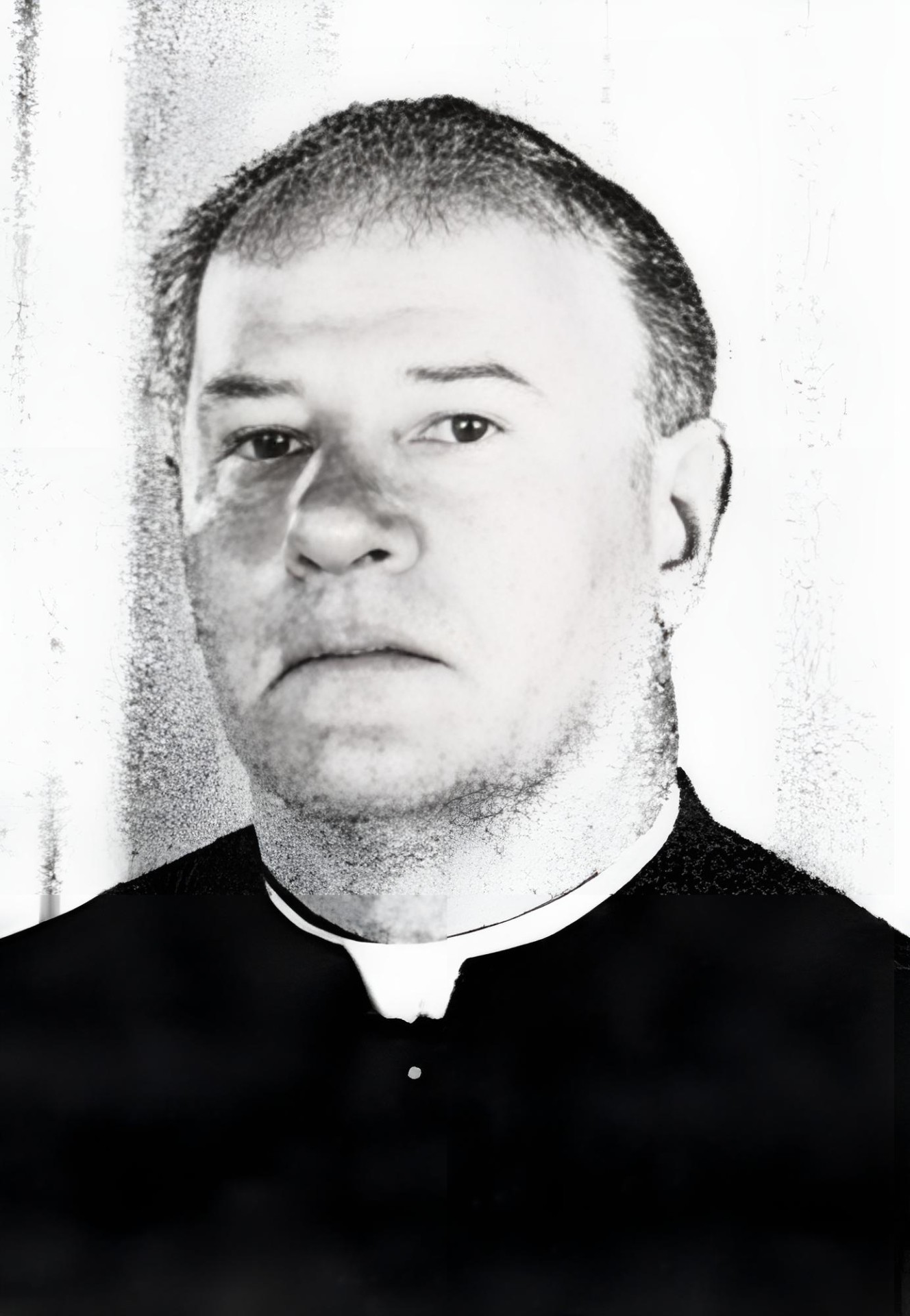


P. Giovanni Stefani
Priabona (Vicenza), 17 dicembre 1908
Borgonovo Val Tidone (Piacenza) , 23 novembre 1975
Missionario in Cina per 25 anni ed in Italia mediante la sofferenza. Di anni 66. Sepolto a Parma
Nato a Priabona (VI) il 17.XII.1908, era entrato all'Istituto di Vicenza nel 1925 dopo aver compiuto le prime tre classi ginnasiali nel Seminario di Vicenza.
Conobbe il Fondatore ed emise la Professione Religiosa nelle sue mani 1'8.IX.1927. Fu ordinato Sacerdote il 29.X.1933.
A 25 anni, nel settembre 1934 partì: per la Cina assieme ad altri 7 Confratelli. Si dedicò con amore allo studio della lingua e, dotato com'era di ingegno per la meccanica, inventò una specie di apparecchio per lo studio dei caratteri, disponendoli per radicali con un metodo originale.
Fu assegnato al Distretto di Shan-chow come aiuto del P. Ambrico e due anni dopo (1937) venne chiamato a Loyang con il P. Emaldi. L'unica sua lettera del periodo missionario parla del lavoro a Loyang:
"Qui ho da lavorare più che a Shan-chow e ne sono contentissimo. Abbiamo già visitato diverse volte tutte le cristianità... Ho una paura matta ancora di predicare, sebbene possa leggere correntemente qualunque libro di cinese... Abbiano già fatto numerosi Battesimi. C'è la guerra, ma non abbiamo paura. Siamo stati già visitati sette od otto volte dagli aeroplani giapponesi, che l'ultima volta, l'11 scorso, hanno lasciato cadere bombe di grosso calibro da far tremare la terra a 50 e più chilometri di distanza..." (18.XII.1937).
Nel luglio 1938 fu nominato Parroco del Distretto di Loyng e di Song-hsien. Oltre a ciò fu pure incaricato di due rifugi per profughi in Loyang. Nel settembre 1939 venne nominato curato della cristianità del basso Kung-shien e nell'ottobre 1940 Parroco a Wang-how.
A causa della guerra, anch'egli finì: con gli altri Missionari in campo di concentramento: amante com'era della libertà, quel periodo di isolamento gli costò moltissimo e nel campo visse un po' appartato, a sè.
Man mano che le truppe comuniste avanzavano nella zona, egli, a causa della precaria salute, fu inviato a Pechino per accertamenti medici e per un periodo di riposo. Da Pechino, assieme ad altri Confratelli della "Domus Studiorum" dovette rifugiarsi a Shangai, donde, alla vigilia dell'occupazione della città da parte dei comunisti, egli partì per Hong-kong, proseguendo poi per l'Italia ove arrivò il 14 giugno 1949.
Negli anni 1950-1957 cominciò a sentire atroci dolori in tutte le parti del corpo. Passò da un medico all'altro, da un'operazione all'altra. Subì: la cardiotomia cervicale e la ganglotomia lombare. Rimessosi un po' in salute, per due anni fu in Brasile: ma dovette rientrare in Italia.
Per altri 15 anni la sua vita fu un calvario continuo di sofferenze, alternate a brevi momenti di serenità. Morì: il 23.XI.1975 a Borgonovo Val Tidone (PC) dove era stato ultimamente ricoverato.
Fr. Giovanni Stefani
Priabona (Vicenza), 17 dicembre 1908
Borgonovo Val Tidone (Piacenza) , 23 novembre 1975
Fr. Giovanni Stefani died at the clinic of Borgonovo Val Tidone (Piacenza) on Nov. 23 1975, following various brain surgeries. He was 66 years old, born at Priabona (Vicenza) on Dec. 17 1908.
He entered the Xaverians at Vicenza in 1925 after having studied ginnasio in the diocesan Seminary at Vicenza. He met the Founder and professed religious vows in his hands on Sept. 8 1927. He was ordained to the priesthood on Oct. 29 1933.
In September 1934, at the age of 25, he left for China together with other 7 confreres. He dedicated himself to the study of the Chinese, and since he had the inclination for mechanical things, he even invented an original instrument to study the Chinese characters.
Fr. Giovanni was first assigned to the district of Shan-chow, as assistant to Fr. Ambrico, and after two years, in 1937, he is in Loyang with Fr. Emaldi. The only letter he wrote from that period talks about his work in Loyang: “Here I work harder than the days at Shan-chow, but I’m happy in doing so. We already visited the many Christian communities… I am still afraid of preaching in Chinese, even though I can fluently read any Chinese book… We had many baptisms in our communities. The war is here, but I’m not afraid. We were visited about 7-8 times by Japanese bombers, and this last Dec. 11 1937, they dropped huge bombs that made the earth tremble 35 miles from here…” Dec. 18, 1937)
He is named parish priest in the district of Loyang and Song-hsien in July 1938. He is also in charge of two refugee camps in Loyang. In September 1939 he is parish priest in the communities of Kung-shien, and in October 1940 priest at Wang-how.
Because of the Japanese-Chinese war, he joins the rest of the missionaries in the concentration camp. It was a difficult period for his health; he lived apart from the others most of the time, and that influenced his behavior the rest of his life.
As the communist troups advanced, he was sent to Peching because of his poor health and psychological condition. From Peching, he found refuge in Shangai together with the confreres of the “Domus of the Students”. In the eve of the communist occupation of the city, he departed for Hong-kong, and proceeded for Italy where he arrived on June 14 1949.
In the years 1950-57 he underwent many operations at the brain because of sharp pains, and visited many a doctor. He was well enough to depart for Brazil, where he spent only two years of service there.
He returned to Italy to embrace a 15-year long Calvary of pains, operations and sufferings, couple with a few serene moments, until the day of his departure from this world at the Clinic of Borgonovo Val Tidone (Piacenza) on Nov. 23 1975.