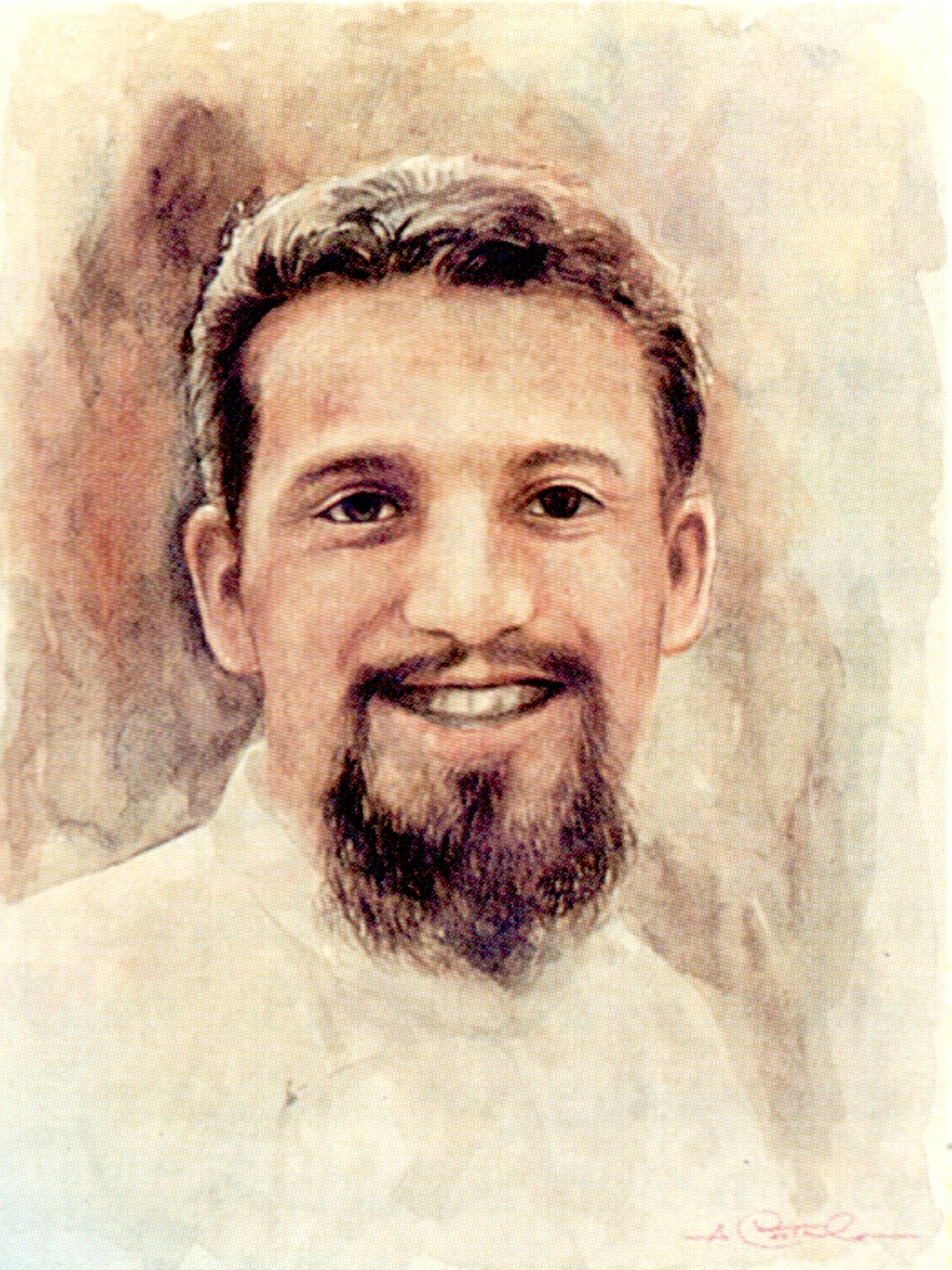


P. Giovanni Botton
9 Maggio 1908 - Carmignano (Vi)
30 Aprile 1944 - Hsuchang (Cina
Il P. Giovanni Botton era nato a Carmignano di Brenta, Padova, il 9 maggio 1908 da Pio e Gabbardo Margherita ed era entrato nel seminario missionario Saveriano di Vicenza nel 1920. Quattro anni dopo era passato a Parma per il Noviziato alla fine del quale (25 agosto 1925) aveva emesso la sua Prima Professione. Sei anni dopo (4 aprile 1931) venne ordinato presbitero a Parma dal Fondatore, il Beato Mons. Guido Maria Conforti.
P. Botton dopo l’ordinazione passò tre anni in Italia addetto all’insegnamento ed all’animazione missionaria. Partì per la Cina il 7 novembre 1934 e, dopo un congruo periodo di studio della lingua, venne mandato nella cittadina di Ju-chow. Dotato com’era di molte belle qualità e di una certa preparazione medica, le adoperò per annunziare il vangelo anche attraverso le opere di misericordia ed, in particolare, con la cura dei malati agli occhi.
Dal 1940 al 1942 occupò il posto di Procuratore della Missione di Cheng-chow, la diocesi in cui lavorava. Nel 1942, a causa della guerra nippo-cinese e dell’avanzata delle truppe giapponesi nell’Honan, tutti i missionari italiani, lui compreso, furono mandati in campo di concentramento che egli però lasciò il 10 novembre 1943 per aprire un centro oculistico nella cittadina di Hsuchang a beneficio della popolazione locale.
Il martirio
Nel frattempo i Giapponesi continuarono la loro avanzata e il 30 aprile 1944 le prime avanguardie entrarono a Hsuchang accompagnate da aerei che volavano a bassa quota sganciando bombe qua e là. Alcune caddero a poco più di dieci metri dalla residenza dei missionari. Davanti a questa situazione drammatica, il P. Botton ed il P. Ermanno Zulian, che era con lui, radunarono tutto il personale della residenza (suore, maestri, cristiani, donne,...) e si rifugiarono nella cantina-rifugio scavata sotto la casa.
Fu una giornata interminabile! Da un lato i soldati cinesi che si difendevano accanitamente, dall’altro le truppe giapponesi che avanzavano inesorabilmente precedute dai tiri dell’artiglieria, dal crepitare delle loro mitragliatrici e occupavano sistematicamente quartiere dopo quartiere. Poco dopo mezzogiorno la battaglia cessò e i due missionari udirono i primi comandi in lingua giapponese. Verso le 17 sentirono anche lo scalpiccio degli scarponi giapponesi nel cortile.
A quel punto il P. Botton, nel timore che i giapponesi, accorgendosi della presenza della gente nella cantina-rifugio vi buttassero delle bombe, o sparassero all’impazzata con le mitraglie, preso in mano un fazzoletto bianco in segno di resa, salì sveltamente la scaletta di legno, gridando: “Chiesa cattolica, Italia”. Non era arrivato ancora in cima alla scala, che due soldati giapponesi lo infilzarono ripetutamente con le baionette. P. Botton scivolò lungo gli scalini e morì qualche ora dopo.
Il P. Zulian, nell’esortare i presenti a pregare per il moribondo, commentò: “Il P. Botton si è sacrificato per noi. Se non fosse uscito, i giapponesi avrebbero lanciato bombe all’impazzata dentro al nostro rifugio, come hanno fatto in chiesa e in qualche stanza, ed allora sarebbe stata la morte per tutti”.
E il venerato Mons. Calza, suo Vescovo, quando seppe della morte di questo suo amato missionario, ripeteva con le lacrime agli occhi: “E’ un martire! Ho perso un missionario ed ho acquistato un martire!”.
Fr. Giovanni Botton
9 Maggio 1908 - Carmignano (Vi)
30 Aprile 1944 - Hsuchang (Cina
Fr. Giovanni (Gino) Botton was gunned down by a Japanese soldier at Hsuchang (China) on April 30 1944. He was 9 days short of his 36th birthday, born at Carmignano di Brenta (Padova) on May 9 1908.
It was his brother who sent him to the Xaverians in Vicenza in 1920, after a chance meeting on a train with Fr. Pietro Uccelli, the Rector of that house. In September 1924, Fr. Giovanni moved to Parma for novitiate, and professed Religious Vows on Aug. 25 1925. He was then ordained a priest on Apr. 4 1931 by Bishop Conforti in the Bishop’s Residence together with Frs. Azzolini and Giannini. After his ordination to the priesthood, Father Botton was sent as vice-rector to the junior seminary in Grumone, (Cremona); a year later he returned to Parma for missionary animation. Finally, he left for China on Sept. 7 1934, together with Frs. Gitti, Turci, Valenti, Stefani, Milani, Miklaucic and Br. Zanini.
After a year of study, Fr. John Botton was sent to Ju-chow to help Fr. Giovanni Tonetto. Ju-chow was the capital of the district, with about 20 Christian communities, all of them in the mountains. The long distances had to be covered on foot through roads, mountain paths or on the back of a donkey. Only a part could be covered by bicycle.
In 1940, Fr. Botton was transferred to Cheng-chow as Mission Procurator. He joined all the Xaverians on May 6, 1942 at the concentration camp in Neixiang, near the town of Nanyang, in southern Honan. Fathers Zulian and Botton were released from the concentration camp in November 1943 to take care of the hospital clinic at Hsuchang. Unfortunately, the Japanese were advancing, and this is how Fr. Zulian recalls the martyrdom of Fr. Botton.
April 30, 1944: "I came back from the hospital at dawn after having celebrated Mass with the local Christians: I immediately called Fr. Botton, who was in church where he had just finished Mass, and told him to come outside because they were shooting. A few low-flying aircraft appeared and fired upon us; from the ground someone replied with anti-aircraft weapons. Every one of us, nuns, women, teachers and Christians, went down into hidden cellar situated under my bedroom. The gunfire went on during the entire day and our garden was the target of the artillery and Japanese aircraft. The Chinese soldiers put up a tough resistance. Inside the shelter we were all praying the rosary. A bomb fell nearby, scattering glass, bricks and tiles. The sound of Japanese machine guns was coming ever closer.
Later, at about 5 pm, the sound of boots in the courtyard signaled the arrival of the Japanese! Botton said: ‘They are coming! I am going out, if not they will bomb and kill us all’. He went quickly up the wooden steps with a white handkerchief in his hand. In the doorway there were two Japanese with their bayonets drawn. Botton called out: ‘Italy! Italy’, then he cried out and rolled back down the stairs. The soldiers had stabbed him with the bayonets. One of the soldiers followed him down shooting. I shouted: ‘Italy! Catholic Church! There are no soldiers here!’
The soldier shouted angrily and shot again, then withdrew. Fr. Botton was bleeding badly. He said to the Christians in Chinese: ‘Do not cry for me. I am happy it happened this way’. Then, with a sigh, he said: ‘Lord, come and take me…I am suffering greatly…I offer my life for China…’ A superior officer arrived, and the one already there spoke to him and he made a sign for me to follow him downstairs. Botton was racked with pain. He whispered a prayer and called on his mother...
I suggested a short prayer and he said: ‘I offer my life to the Lord for the salvation of China’. I went outside with the commanding officer who closed me in a room. I later found out that Fr. Botton had died around midnight. I told the Christians that he had given his life to save theirs. They nodded in agreement and some of them cried. Like the good shepherd, our dear Fr. Botton gave his life for his sheep. He was buried in the garden of the mission of Hsuchang.”